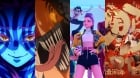
For its 18th edition, Anima Syros reached for the furthest depths of outer space with a theme of animated cosmos.
THE COSMOS BECOMES ANIMATED AT ANIMA SYROS
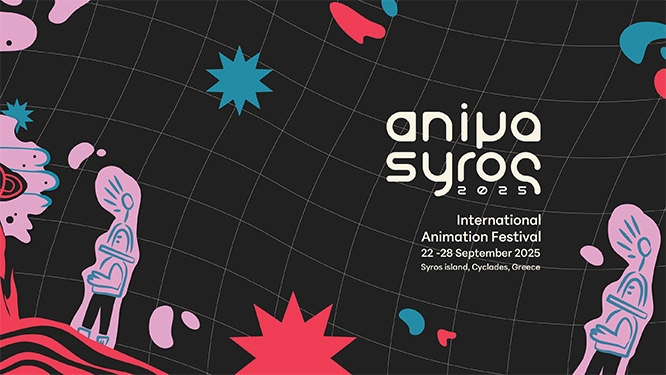
For its 18th edition, Anima Syros reached for the furthest depths of outer space with a theme of animated cosmos. The three programs, comprising 25 films, included such classics as Pixar's WALL-E, Meet the Robinsons, and Laika. The 98-minute WALL-E is about a robot named WALL-E who is responsible for cleaning a waste-covered Earth, who falls in love with Eve, a sleek search robot, and discovers a new purpose in life. The film addresses consumerism, waste management, human environmental impact, and global catastrophic risk with charm and humor, and is even more relevant today than when it was released in 2008. Directed by Andrew Stanton, WALL-E won the 2009 Oscar for best animated feature.
The 2007 Disney Meet the Robinsons was also screened. In the 95-minute film, Lewis, a 12-year-old orphan and brilliant inventor, sets off on a time-traveling adventure to find the family that he never knew. In the fantastical world of 2037, which now doesn’t feel so far away, with hip-hopping frogs and talking dinosaurs, Lewis discovers that the fate of the future rests in his hands, but he can’t save it alone. When Lewis meets Wilber Robinson, the wacky Robinson family teaches Lewis to keep moving forward and to never stop believing in himself.
Of the 22 short films in the Cosmos programs, my favorite was Laika, a 2010 fictionalized story of the first dog launched into space by Russian scientists in 1957. In the 9-minute film made by Avgousta Zourelidi at the National Film and Television School in the United Kingdom, we meet Laika as she becomes the first living creature to experience a launch into orbit and weightlessness. A curious and intelligent dog, Laika fulfills the duties taught to her by the scientists back on earth. She also daydreams of her life before space travel and her humble beginnings on the streets of Moscow. The film is a touching recreation of what Lika’s space adventure might have been like, as well as portraying an important event in the history of space travel.
In celebration of the 80th anniversary of Greek animation, tribute was paid to 5 pioneers of Greek animation. The screening included films by Yiannis Koutsouris, Angelo Chatziandreou, Iordanis Aaniadis, Anda Ganosi, and Georges Sifianos.
The films screened were created between the 1940s and 1980s. They ranged from political and social satire to mythology, fairy tales, and allegorical narratives presented in digitally restored versions. The first Greek animated film, Il Duce Narrates, was created between 1942 and 1945. Stamatis Polenakis made drafts of the film on Sifnos Island in 1942, where he took refuge during the Italian occupation of Greece. After Greece was liberated in 1945, Polenakis returned to Athens, where filming began.
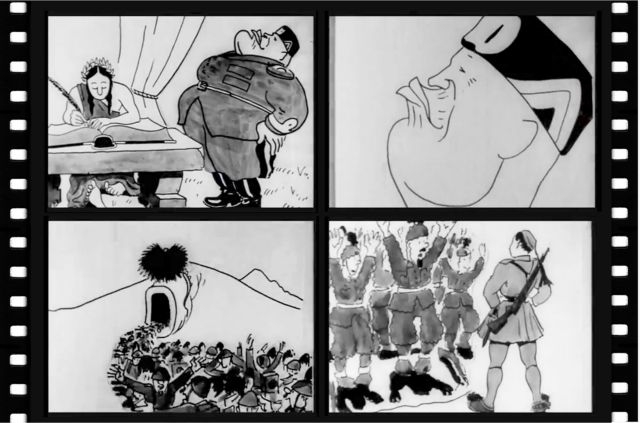
The short film satirizes the Italian invasion of Greece on 28 October 1940, especially Mussolini, who recounts his exploits but constantly contradicts himself. The film was lost during the Greek Civil War, but a negative was discovered in 1980, and the film was restored.
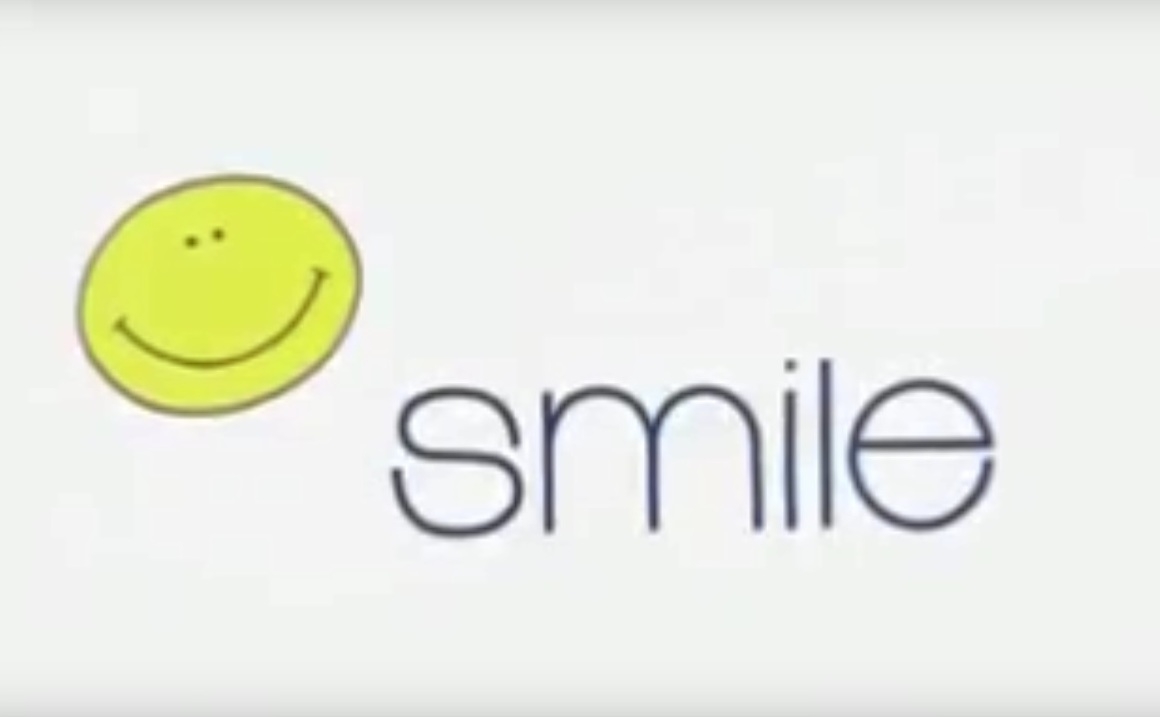
Born in 1952, Georges Sifianos is a true master of Greek animation. In 1973, he made his first animated film, Smile. Using 2D traditional animation and cutouts, the biting satire portrays the American way of life. Pop culture symbols and historical references run throughout the 2-minute film to clearly reflect the era in which it was made.
Along with animating, Georges is an author, professor, and scholar. He is also researching the frieze of the Parthenon. He has discovered that if you look at the figures of the frieze carefully, you can see that there is continuity and connection between the figures, which look like the key positions of an animated film. Georges’ observations prove that Phidias was not only the greatest sculptor of Classical Greece, but he was also an expert on movement analysis and a very good animator two thousand years before the advent of animated cinema.
The Ancient Greeks often decorated ceramic pots with figures in successive stages of action. Spinning the pots creates a sense of motion and action, which makes the figures on the pot appear to be running as if animated.Georges has also written extensively about movement on early Greek pottery. At the festival this year, Georges was a member of the Student and TV and Commissioned Films Jury along with Andrea Bauer, Head Programmer at The International Trick Film Festival in Stuttgart, and artist and educator, and former President of ASIFA Deanna Morse.
Tribute was paid to Croatian animation with 4 programs curated by filmmaker and Artistic Director of Animafest Zagreb, Daniel Suljic. Four programs, including a total of 28 films, covered the historically important Zagreb School of Animation, which lasted from the 1950s through the 1980s. The Zagreb Film Studio became synonymous with the Zagreb School of Animation, a term coined by French film historian Georges Sandoul and critic André Martin at the 1959 Cannes Film Festival. Rather than being a formal institution, the Zagreb School refers to an animation style characterized by minimalist drawings, sparse backgrounds, and narratives centered on anti-hero figures – ordinary individuals attempting to navigate life’s complexities. These films generally lacked dialogue, relying instead on music and stylized visuals to convey emotion.
The first program featured such classics as Dusan Vukotic’s 1961 Surogat, or as it is known in English, Ersatz. The simple story is about a man who comes to the beach and inflates everything that he needs out of plastic. He even inflates his girlfriend. The humorous film with a serious ending was the first non-United States short animated film to win the Oscar in 1962. Thirty years after winning the Oscar, Surogat was also the inspiration for the creators of The Simpsons’ show within a show, The Worker and Parasite Show, in the episode titled Krusty Gets Kancelled. Worker and Parasite was depicted as an Eastern European version of the Itchy and Scratchy Show. It featured a cat and a mouse as a worker and a parasite, symbolizing labor relations in Eastern Europe. The couch gag animation followed the style of the Zagreb School of Animation.
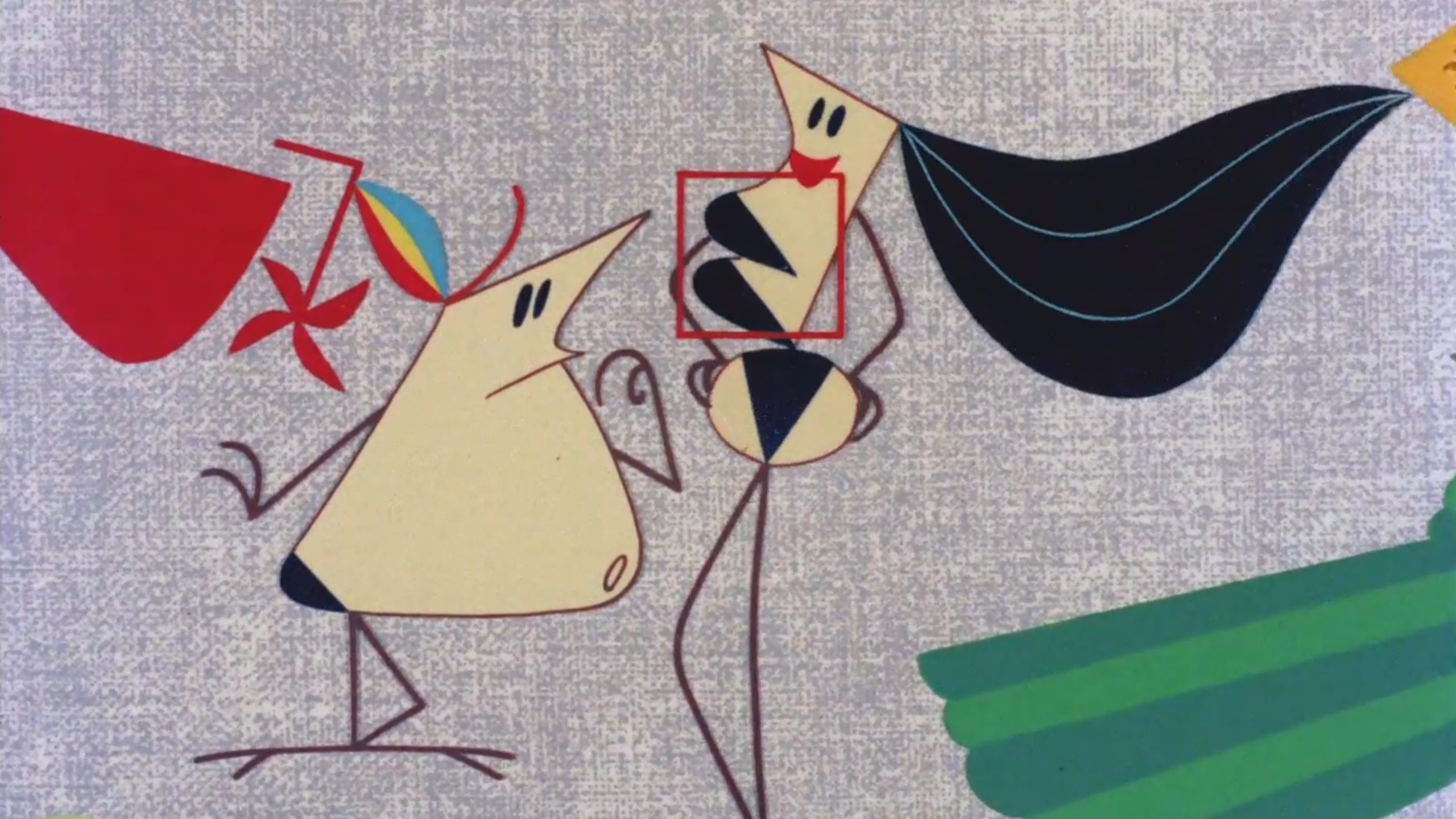
The tribute also showcased a new generation of filmmakers who have emerged over the past two or three decades. They have revitalized Croatian animation and continue to win awards at international festivals with their own styles and a variety of techniques. Kolac (Cake) by Daniel Suljic is a perfect example of this. The 1998 film, created with oil on glass, is a satirical animation about the breakup of the former Yugoslavia. The 8-minute film begins as a simple story about a group of people celebrating at a dinner party. All is well until the cake is brought out and cut into unequal pieces.
Velijko Popovic directed The Cyclists, an extremely humorous film that makes me smile every time I see it. In the 2018 film, the cycling season is nearing its grand finale. During the final race, two riders in the lead are competing for more than the Grand Trophy. They are fighting for the affection of a lady and the fulfillment of their erotic fantasies. Meanwhile, the small port town is preparing for the arrival of a large ocean liner and its dashing captain.
The film is based on the paintings of Croatian artist Vasko Lipovac. The film’s visual style and unique aesthetics are inspired by the artist’s vivid colors in his installations, particularly one featuring 60 cyclists.
Last but far from least, the King of indie animation, Bill Plympton, was honored with a special tribute. Bill breaks all of the rules you are taught in film school and draws all of his films frame by frame, including his feature films. Two of his features, Cheatin’ (2014) and his latest, Slide, were screened at the festival along with a program of 8 shorts.
Four of the delightfully funny Guard Dog series were included. In the Oscar-nominated Guard Dog, we first meet our fearless canine and discover why dogs bark at innocent creatures such as pigeons and squirrels, showing the audience how the series began in 2006.
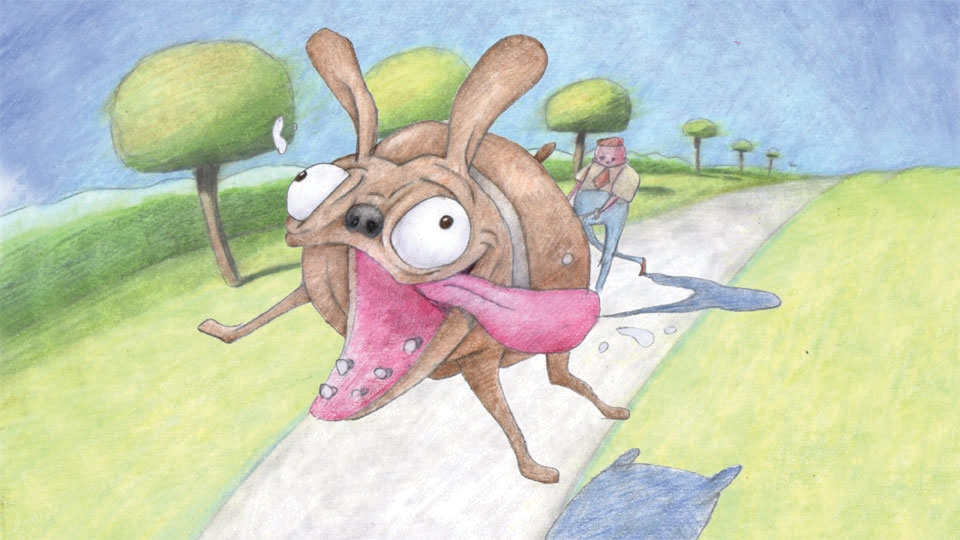
Also, the 2006 film Guide Dog, where our hero helps blind people with the usual disastrous results. Then, in 2008, our star joins a firefighting company to save the world from house fires and gain the affection he so desires. Of course, things don’t go quite as planned.
In 2017, we find our hero patrolling airports sniffing for illegal drugs. Nothing ever ends for our hero exactly as planned, as he wreaks havoc and mayhem throughout the airport.
The screening was rounded out with 4 more films. Your Face, is another of Bill’s Oscar-nominated films, where a love song literally melts a singer’s features into surreal shapes until an unforgettable twist swallows him whole.
Homer’s Face is a 2-minute Simpsons couch gag variation of Your Face. Mexican Standoff is a music video Plympton created for Dutch musician Parson Brown. The music video interweaves Bill’s trademark monochromatic animation with live-action footage of the singer performing, creating a striking visual duel between drawing and reality.
Rounding out the tribute screening was The Cow That Wanted To Be A Hamburger. The 6-minute children’s fable is about the power of advertising, the meaning of life, and ultimately the test of a mother’s love. The program was a lovely tribute to a legendary animator.
The competition programs were very strong this year, especially in the International Competition, for which I was a member of the 3 person selection committee. One of my favorite films in the International Competition was the 13-minute Czech film Hurikan. Jan Saska combines horror and pathos in the beautifully animated black and white film about the protagonist, Hurikan, a woman, and beer.
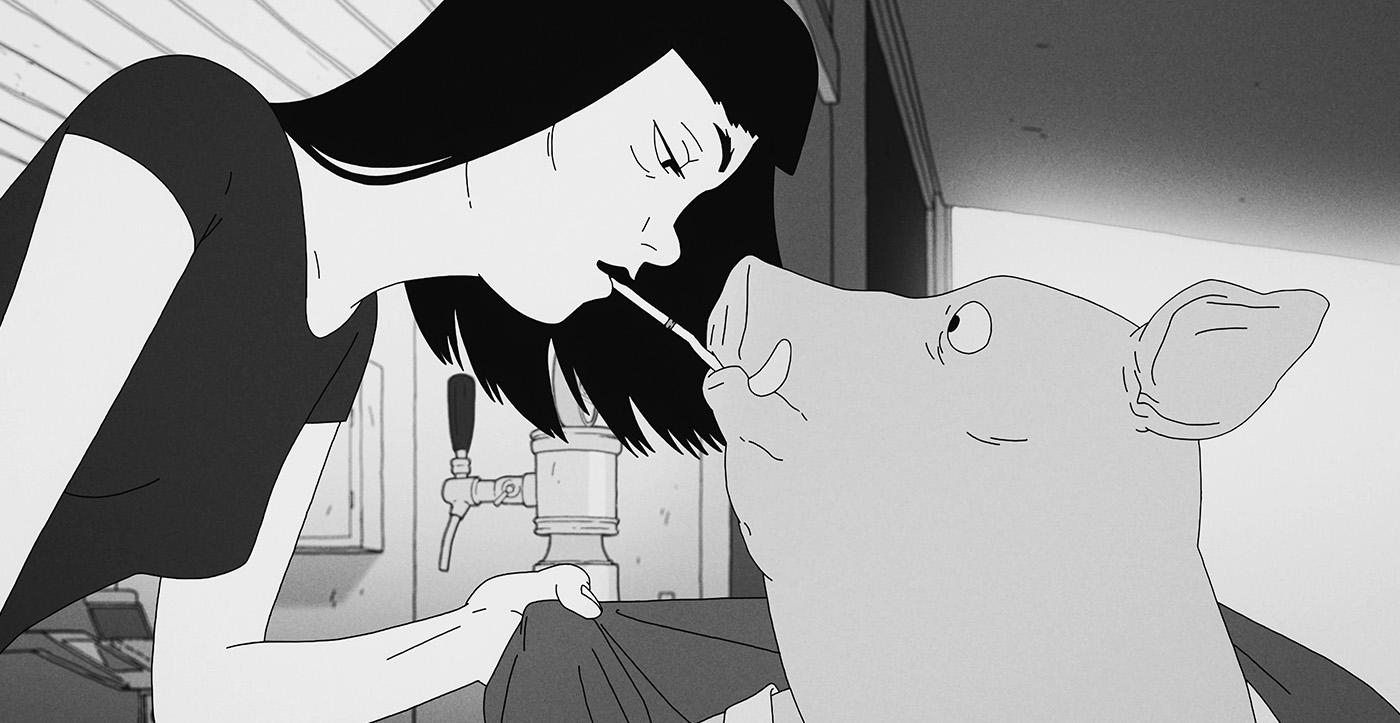
Hurikan rushes to save his favorite beer stand from closure when the last keg runs dry. He also wants to impress the bartender, on whom he has a crush. Set in a wild Prague district, he faces robbers, cops, and his own thirst. Will he make it back to the beer stand with a keg or not? Saska has created a character that you just can’t help liking despite himself. The film is a joint Czech Republic, French, Slovakian, and Bosnian and Herzegovinian production.
One look at the state of our world makes it easy to understand why more and more animators are making political short films. From politics to fascism, nothing is taboo on today’s animation front. Carlo Vogele’s latest film, Brown Morning, certainly fits into this category. From small compromises to major acts of cowardice, brown animals slowly infiltrate households and ultimately seize control. An authoritarian regime with absurd laws begins to take shape.
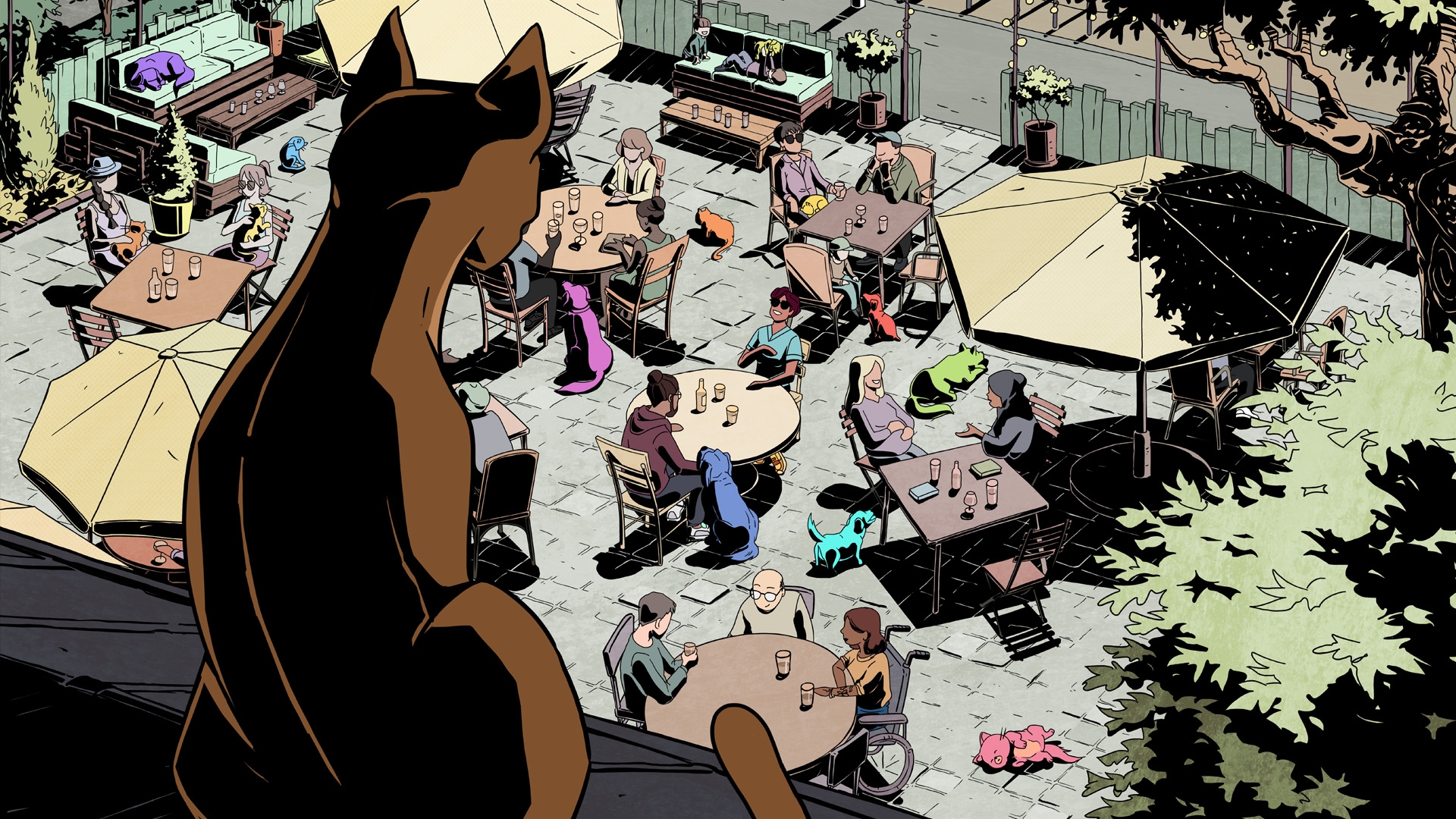
You are living a fine life. You read the newspapers and play cards with your friends. To avoid trouble, you submit to the rule that brown is the only color and books are being burned in this colorless world, only to painfully discover the true horror of fascism. You have become a victim of a government that demands conformity in all things. By the time you realize it, it’s too late.
Based on Franck Pavloff’s 1998 best-selling allegorical novel, Brown Morning was written as a protest when the Rhone Alps region of France leaned to the politically extreme right wing. The book and Vogel’s film adaptation are a powerful wake-up call to all of us to pay attention to what our governments are doing.
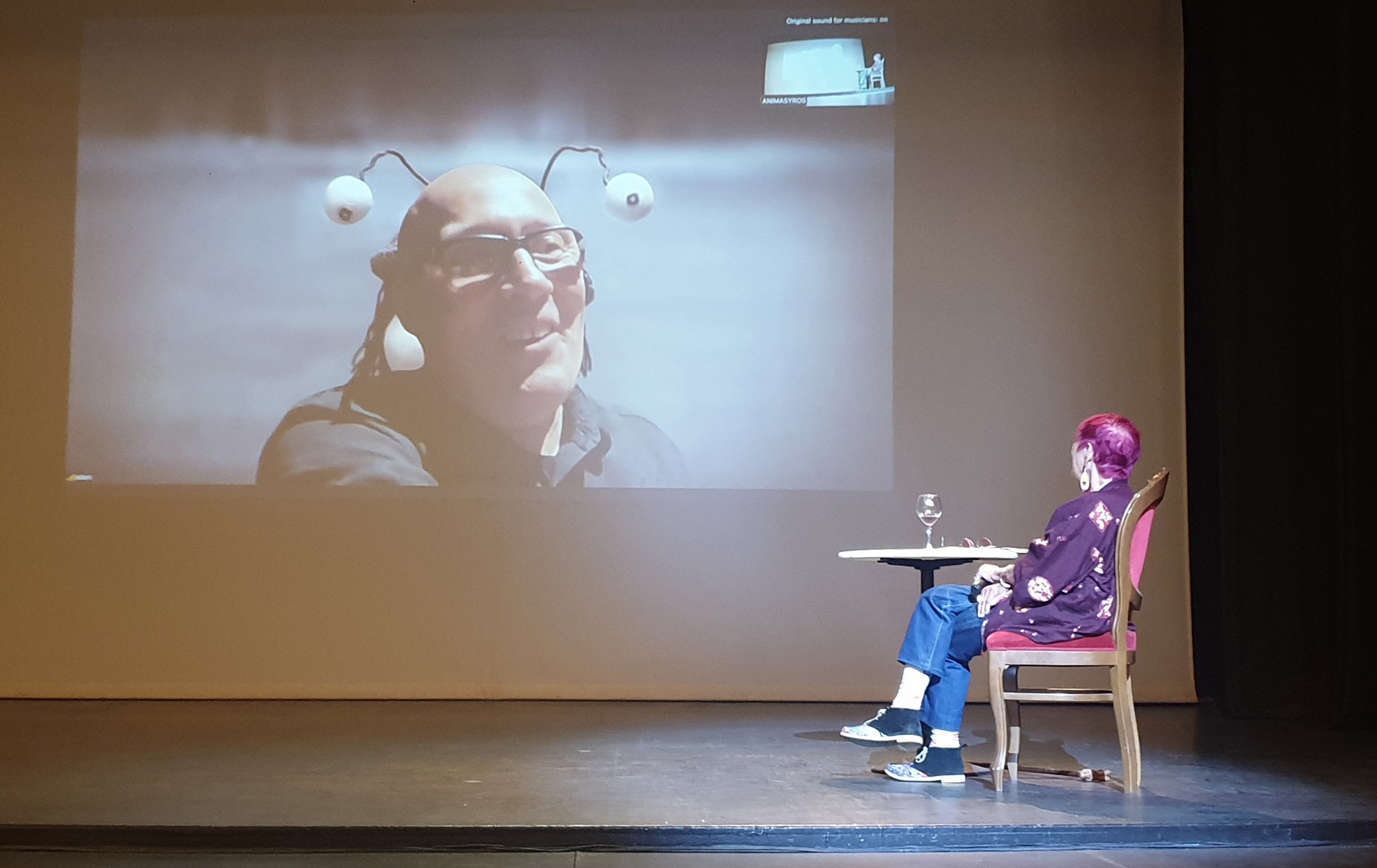
While Oscar-winning animator Adam Elliot was at home in Australia, his wonderful film Memoir Of A Snail was enjoying island life on Syros, and Adam was with us on Zoom. I had the immense pleasure of spending an hour in conversation with my friend Adam via the big screen on the stage of the magnificent Apollo Theatre.
We chatted about his early life in the outback, his family’s move to the suburbs, and how Adam came to animation. We also talked about how his characters are based on his family and friends. He told us a little bit about his new film that he is working on.
Along with all of the screenings, the 4-day Anima Syros Agora is an important part of the festival. Agora means market in Greek, and at Syros, it has come to include workshops, masterclasses, round tables, seminars, and networking events. It is also home to a pitching forum.
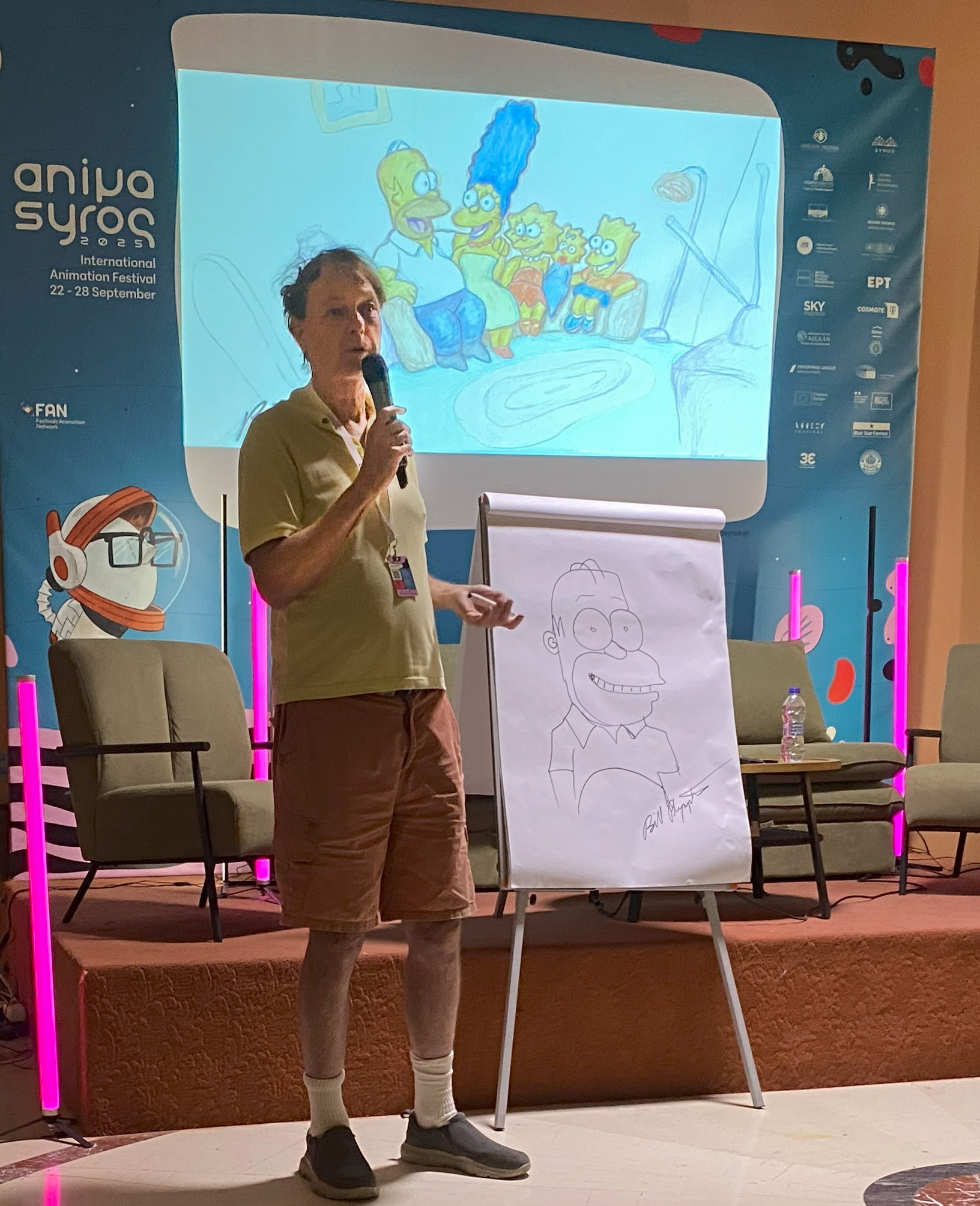
This year, there were some truly magical moments at the Agora. Bill Plympton gave an extremely entertaining 1 ½ hour Masterclass. During the class, he told humorous anecdotes, drew, and showed films to the packed audience. He also presented his three rules for making a successful short film. He calls it “Plympton’s Dogma”.
Make the film:
- Short. Anything longer than 5 minutes is difficult to sell.
- Cheap. He keeps a limit of $1,000 per minute. This way it’s easy to make your money back. This is also why he sticks to hand-drawn animation.
- Funny. Funnier films are much more fun and easier to sell than serious ones.
Whether or not you agree with Bill, it certainly works for him.
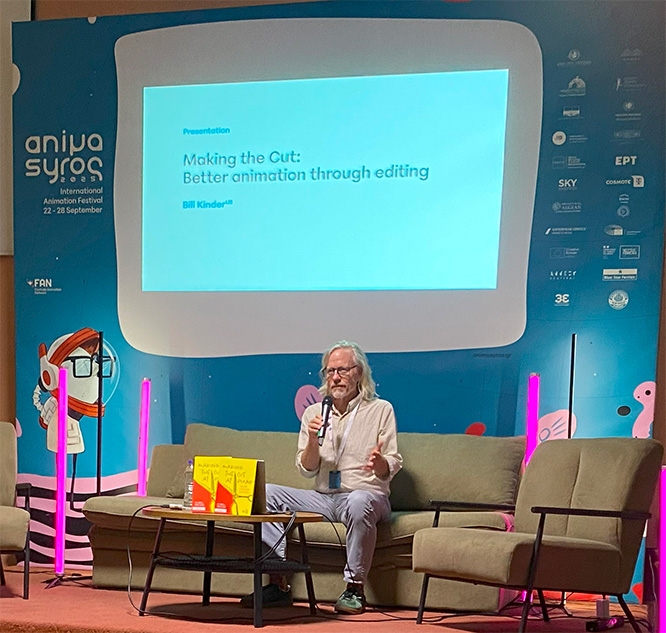
Former Pixar editor Bill Kinder gave a succinct presentation on how to create better animation through editing. During his 18 years at Pixar, Bill founded the editorial and post-production department, which became known as the “hub of the wheel” for an unprecedented string of critically acclaimed box office hits.
Bill is also the author of Making the Cut at Pixar, The Art of Editing Animation. This book should be a must-read for every young director and animator. With the growing trend toward 15 and 20-minute “short” animations, I watch too many films that would be much better if they were edited down to 7 to 12 minutes. Even if you are not a director or animator, you can learn a lot from Bill’s book.
Joanna Quinn and I have been dear friends for years. We had a packed crowd for our Agora talk, which was really a chat between two old friends. We laughed a great deal, and the audience laughed along with us as we each talked about our own book and each other’s book and anything else that came into our heads.
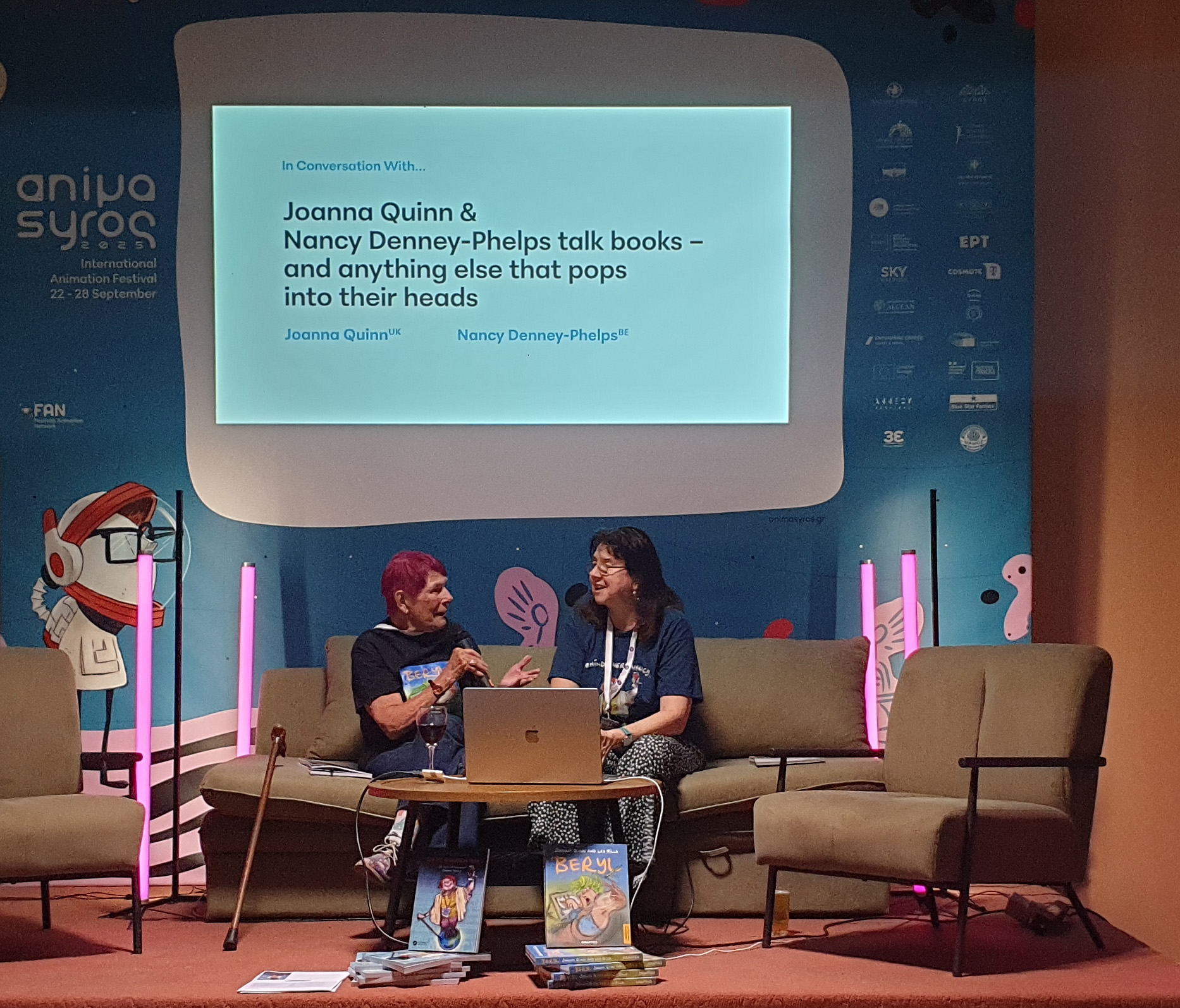
I wrote the book On The Animation Trail, 20 Years of Festival History, published last December, and Joanna and her partner Les Mills’ book about their iconic character Beryl was hot off the press at Anima Syros. One audience member came up after the talk and told me he felt as if he had been at the next table to Joanna and me at a café and was eavesdropping on our funny conversation. It was a memorable 1 ½ hours.
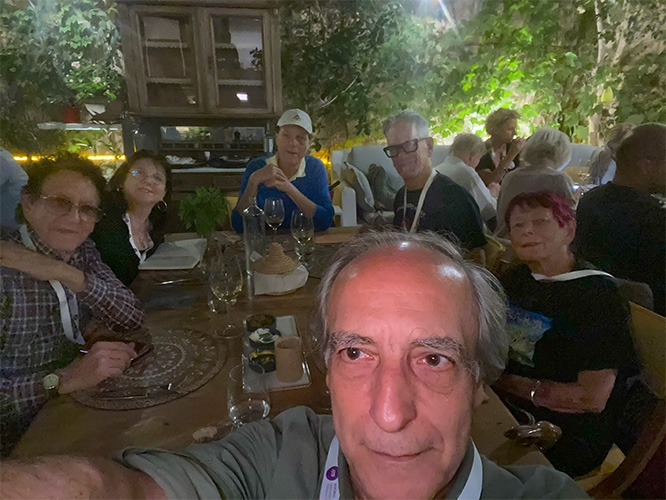
Joanna and Les’ book is all about Beryl, the iconic character the couple have created. And what a book it is! It gives the reader an in-depth look into the creative processes of director Joanna and screenwriter Les. It includes AR images, which bring the characters to life right in your hands. Beryl also includes sketches, storyboards, final artwork, and very entertaining commentary from both Joanna and Les.
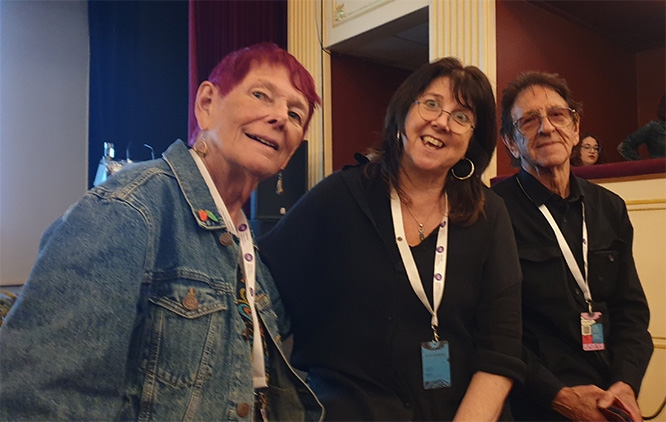
My book is about exactly what the title says: twenty years of festival history. From Annecy to Beirut, to the founding of Anibar in Peja, Kosovo, and of course, KROK, but also much, much more. I have recorded not just the films screened but the people who were there and what makes each festival unique.
Once again this year the Agora Pitching Forum was associated with the International MIFA Campus at Annecy. The program at Syros is aimed at supporting young creators and artists from Mediterranean countries: Greece, Albania, Croatia, Cyprus, Lebanon, and Tunisia. Project plans were submitted, and six were selected to pitch at the Agora. The winning pitch will automatically go to Annecy to pitch.
This year, the pitching coaches were Delphine Nicolini, Joelle Oosyerlinck, and Agnès Patron. After 4 days of coaching, the pitching forum participants presented their projects to the entire Agora audience. All six pitching projects will go to Annecy in June to participate in the Anima Syros Mediterranean Focus Pitch.
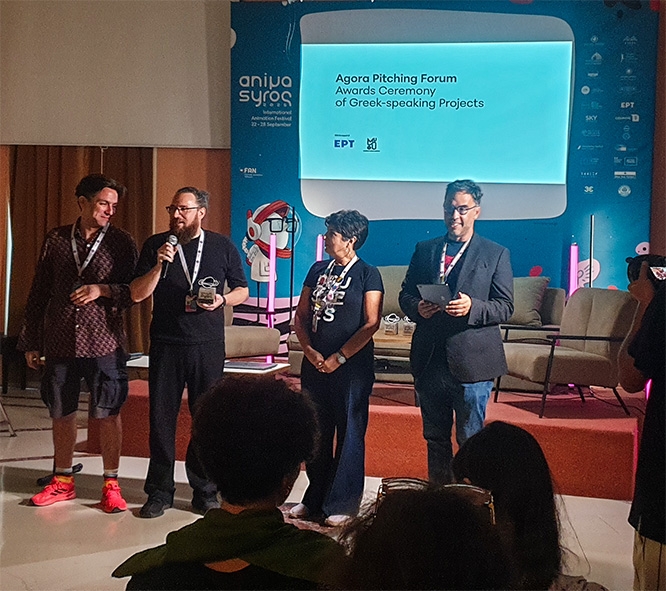
Two projects that were pitched, Lafcadio Hearn Disappeared From The World by Panos Voulgaris and Sergio Kotsovoulos, and Coffee’s Fresh by Aspasia Kazeli, divided the two awards given to Greek projects participating in the workshop, independent from the MIFA Campus Program.
Coffee’s Fresh was awarded Music and Sound services for their project by the Greek sound studio MUSOU. Lafcadio received a cash prize of 1500 euros from the Greek broadcaster ERT.
Anima Syros believes in giving back to the community. To this end, the Media Literacy Programs were open to residents of Syros. The 8 projects were designed for specific age groups and abilities, such as the Space Soup workshop for people with disabilities. This group worked with paper, colors, and mixed media to bring the Cosmos alive.
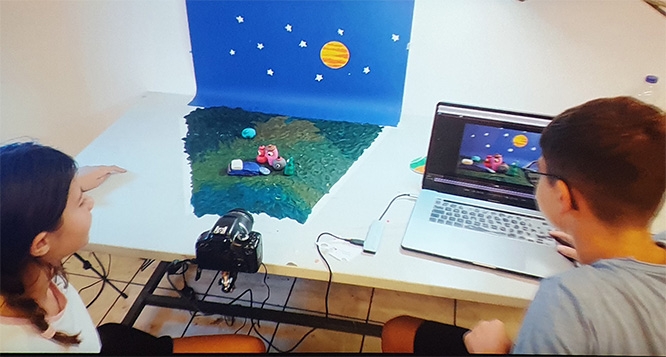
At the workshop for Seniors, they became kids again, breathing life into clay. Students with disabilities learned the principles of stop-motion and created their own film. The workshop for teens also worked in stop-motion. The Educational workshop for families explored the wonders of creating stop-motion for beginners of all ages. The Young Adults workshop also created a film in stop motion. The Educational Workshop with ceramics was for the entire family.
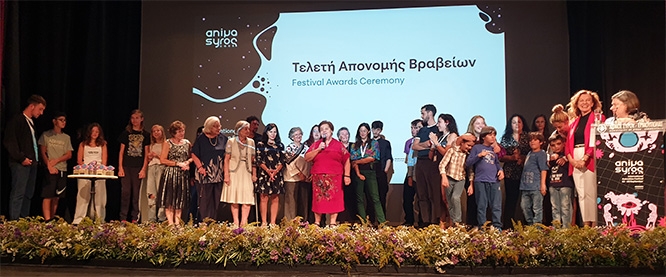
The proud workshop participants were presented on stage at the closing night ceremony.
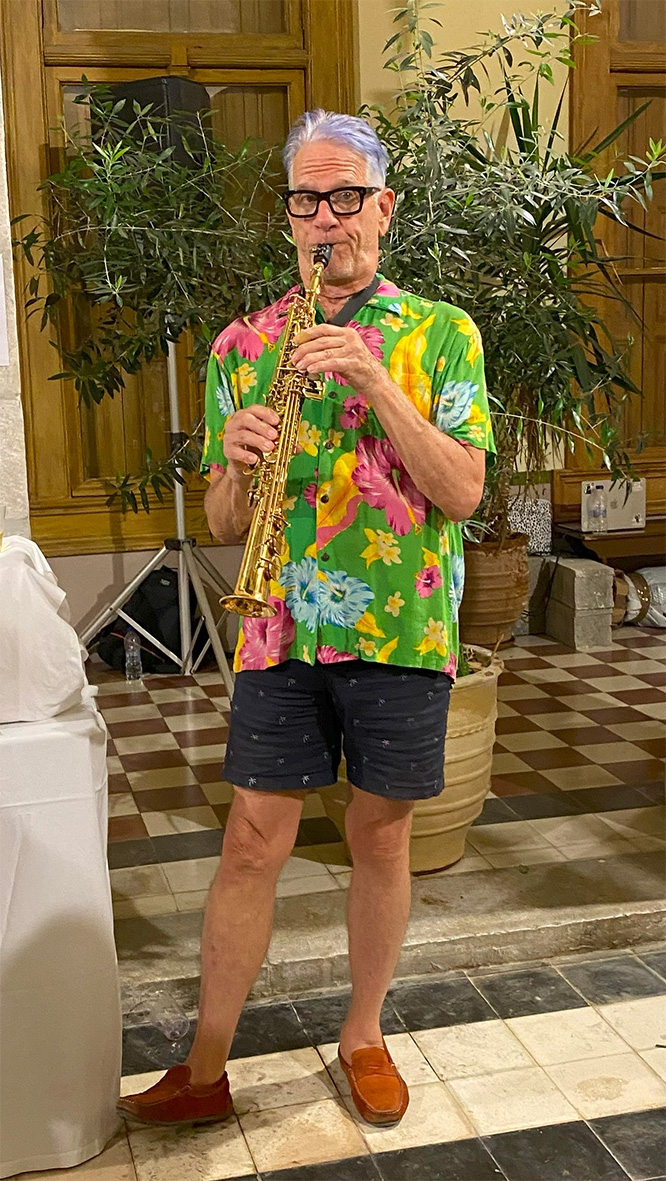
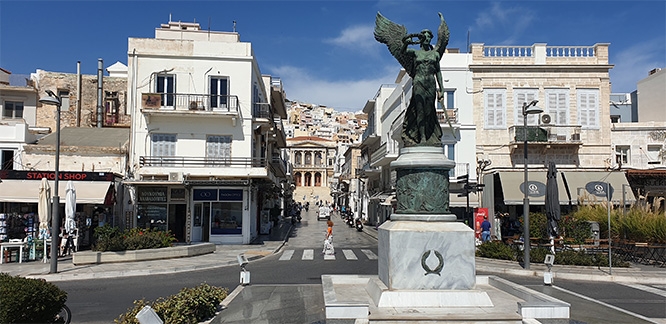
Syros is such a lovely island, and the festival staff and volunteers are so friendly and kind that I come away with enough lovely memories to keep me warm throughout the winter. I am already looking forward to next year.
A big thank you goes out to Vassilis C. Karamitsanis, President of Anima Syros, Maria Anestopoulou, Artistic Director, Marineta MAK Krtikou, Agora Coordinator, and Yanni Lolis, who does such a fabulous job making sure that all things technical run perfectly at the Agora. Over the many years of attending the festival, these four have become very dear friends, and I am so proud to be part of the team as the International Program Consultant.
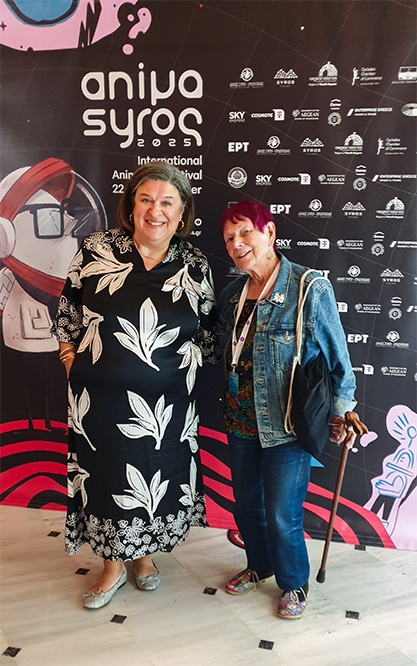
Another thank you goes out to all of the staff and volunteers who are so nice and work so hard to make everything flow seamlessly. They are always there to answer a question, no matter how stupid it is.
I also want to acknowledge the Nisaki Hotel, where we have stayed for many years. They always have a warm welcome waiting for us and a lovely room with a balcony by the ocean, so that I go to sleep and wake up hearing the ocean and feel like I can touch it from my balcony.
If you want to learn more about the festival, go to: animasyros.gr
The 2026 edition of Anima Syros will take place from 21 to 27 September.
List of winning films:
Grand Prize - International Competition:
Hurikán (Jan Saska, BA / CZ / FR / SK, 13’07”, 2024)
Special mention:
Dog Alone (Marta Reis Andrade, PT, 13’02”, 2025)
Best Greek Film Award:
Holy Shit (Taxiarchis Deligiannis - Vasilis Tsiouvaras, GR, 4’37”, 2025)
Students' Section Award:
The Last Drop (Anna Tőkés, HU, 10’43”, 2024)
Special mention:
Urban Duo (Hongyu Yue, CN, 6’20”, 2024)
TV & Commissioned films Award:
Maaimä (Lucija Mrzljak, EE / HR, 5’, 2024)
ANIMAPRIDE Award:
Kabuki (Tiago Minamisawa, BR / FR, 12’47”, 2025)
K.ID.S Award:
Grandpa Has A Broken Eye And Mom Is An Adventure (Marita Mayer, NO, 8’13”, 2024)
Audience Feature Award:
Hola Frida (André Kadi & Karine Vézina, FR / CA, 82’, 2024)