
Half measures are never an option for the prolific filmmaker, who shares insights into his expansive work on ‘Avatar: Fire and Ash,’ including the Ash Clan’s origins, Wind Traders mythology, Spider’s expanded arc, and collaboration between Wētā FX and ILM on 3,500 VFX shots for his second epic ‘Avatar’ sequel, which won a BAFTA yesterday and is nominated for multiple VES Awards and two Oscars.
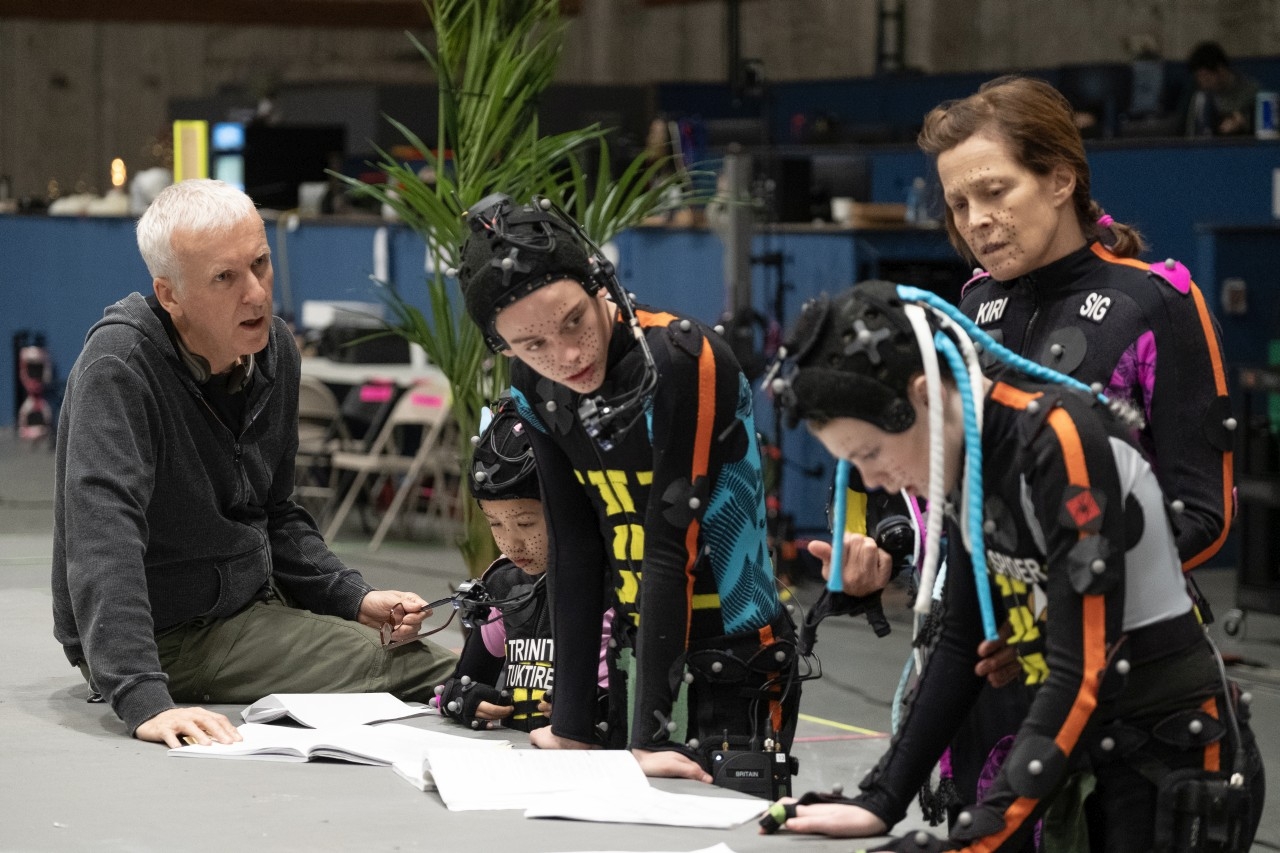
With the VES Awards coming this Wednesday, and the Oscars set for March 15, James Cameron’s second epic Avatar sequel, Avatar: Fire and Ash has hit the home stretch in its 2025-26 awards season run. Yesterday, the film took home the BAFTA Film Award for Best Visual Effects, honoring the work of Wētā FX on the production. It also won Best Visual Effects at the Critics’ Choice Awards and earned additional craft victories from critics groups, including a Best Voice Acting/Animated/Digital Performance award from the Austin Film Critics Association.
On the nomination front, the film received two Academy Award nominations — Best Costume Design for Deborah L. Scott and Best Visual Effects for Joe Letteri, Richard Baneham, Eric Saindon and Daniel Barrett — and leads the VES Awards with a slew of nominations. It has also been recognized across other season award lists that reflect broad industry attention to its technical and artistic achievements. And it’s earned more than $1.4 billion at the worldwide box office.
Read AWN/VFXWorld's interview with Daniel Barrett and Eric Saindon
Wētā FX’s Dan Barrett and Eric Saindon Talk ‘Avatar: Fire and Ash’
So, in discussing his latest film and the huge amount of work that went into its production, Cameron begins by noting that routine craziness is baked into his process. “Life is always crazy for me!” he laughs. “It doesn’t matter. When I’m not making a movie, I’m doing something else like exploring the deep ocean. So, I try to keep a level of craziness to a maximum all of the time.” Despite the constant pressure, his hair remains intact. “I was gifted genetically with strong hair that hasn’t come out yet.” He does nothing half-heartedly. He spent 6-7 months making notes for the Avatar sequels. “I write from two directions at once,” he explains. “I write backwards from a list of things that I actually want to see on the screen, and I write forwards for character and logic meaning. Jake Sully and Neytiri are a mated pair at the end of Avatar. Now let’s cut to 15 years later. They’ve got kids. I’m a family guy. I’ve got five kids, so I thought I’m going to write a family story. I’m going to write what it means when the two fearless courageous warriors are defending their planet from invasion have children. What does that do to their thought process, judgements, relationships with each other, and attack strategy? Jake literally leaped off of one creature onto another one that was fierce and ferocious in order to get what he wanted… which was the girl. And by the way, in the process led a revolution. Who is that guy now years later? How has his identity shifted? How has Neytiri’s identify shifted?”
Notes resemble an internal dialogue externalized. According to the director, “I remember the moment I wrote a note to myself and said, ‘What if there’s a kid who gets lost out in the woods and runs out of air? Wait a minute. What if that kid happened to be Quaritch’s son.’ I wrote under it, ‘Not.’ Then I talked myself into it over the next few pages, so when I sat down with the screenwriters I said, ‘Guys, we’re doing this kid who is named Spider and he’s Quaritch’s kid. By the way, Quaritch is coming back.’ They’re all like, ‘What? He’s dead.’ I went, ‘I know but he’s not really dead. He’s encoded.’ It goes from there. After that it becomes an iterative process playing by the normal rules of narrative storytelling. You’ve got to have surprises, twists and turns, and betrayals, all of those sorts of things.”
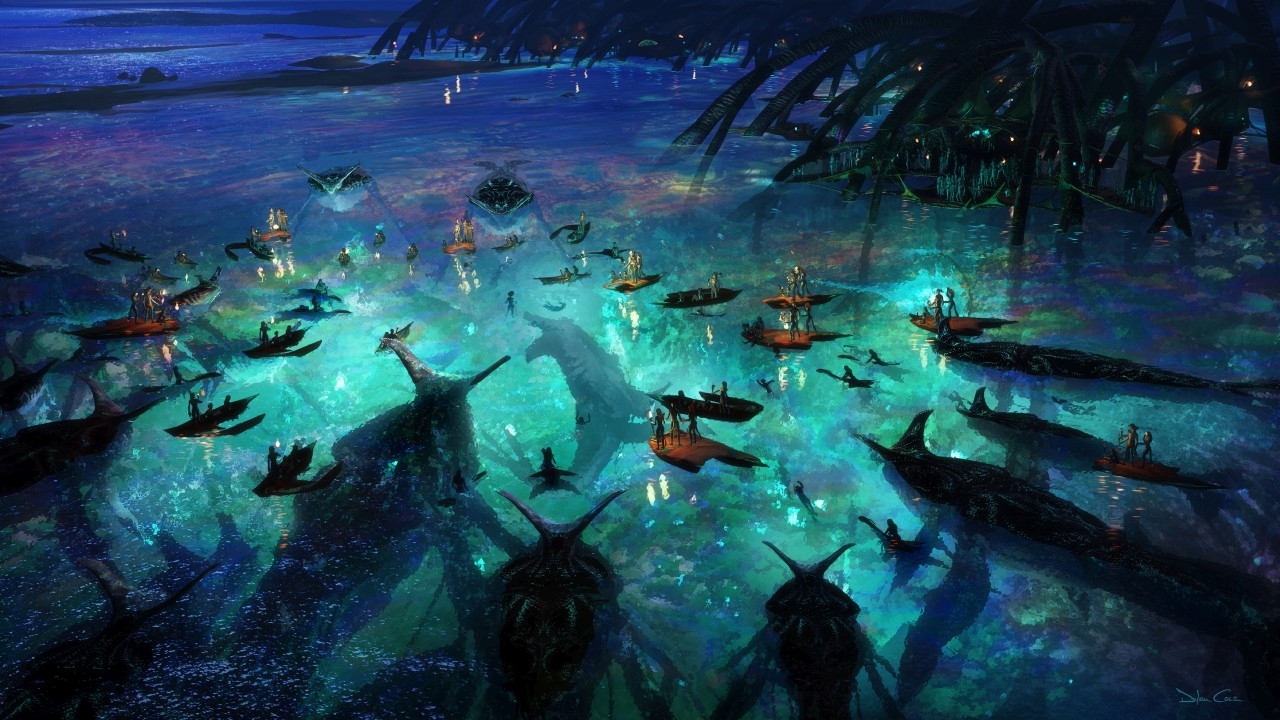
Each instalment of the franchise represents a journey. “Where are they going to go?” Cameron asks rhetorically. “Who are they going to meet? Who are they going to take sanctuary with? The second I said ‘ocean’. I went, ‘Okay, what does an ocean adapted Na’vi look like? What does their community look like? What does their habitat look like?’ We hadn’t even written scripts when I already had the art department working on what became the Metkayina village and the fractal reef because we used Mandelbrot sets to mathematically grow some of the coral to figure out the look. Then it became a parallel process. I propose a new tribe, clan or culture and the art department gets to work on it. We incorporate aspects of what the design team does into the writing so it’s a closed loop creative process.”
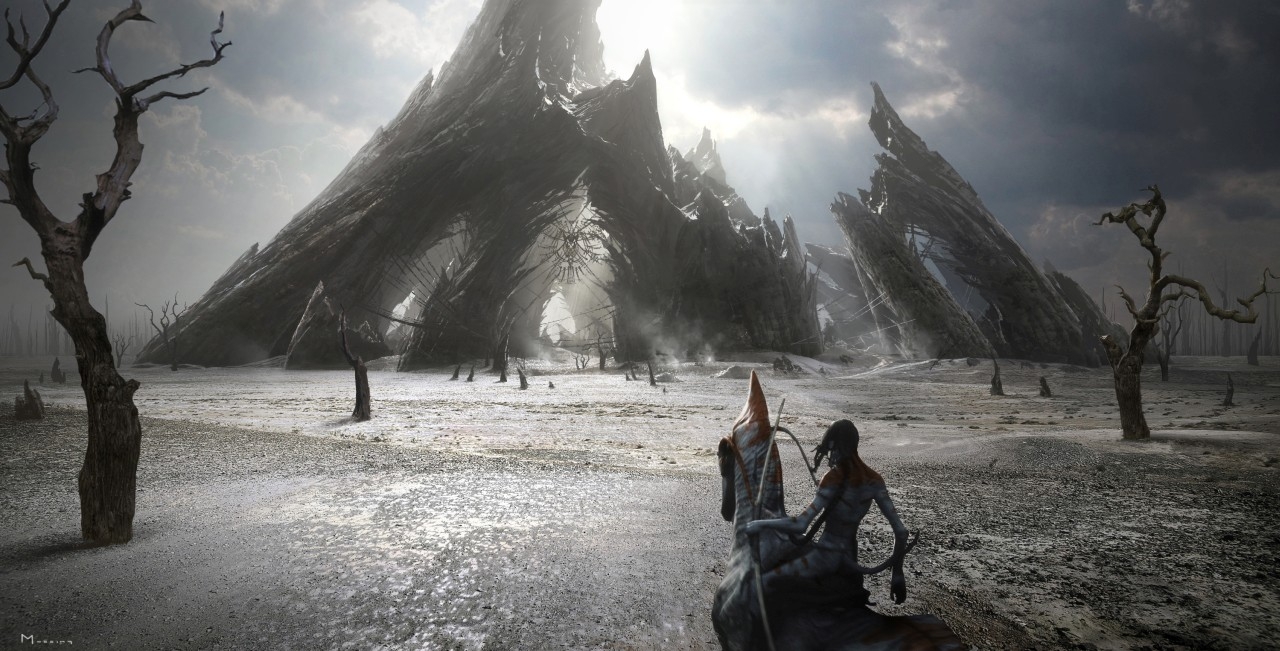
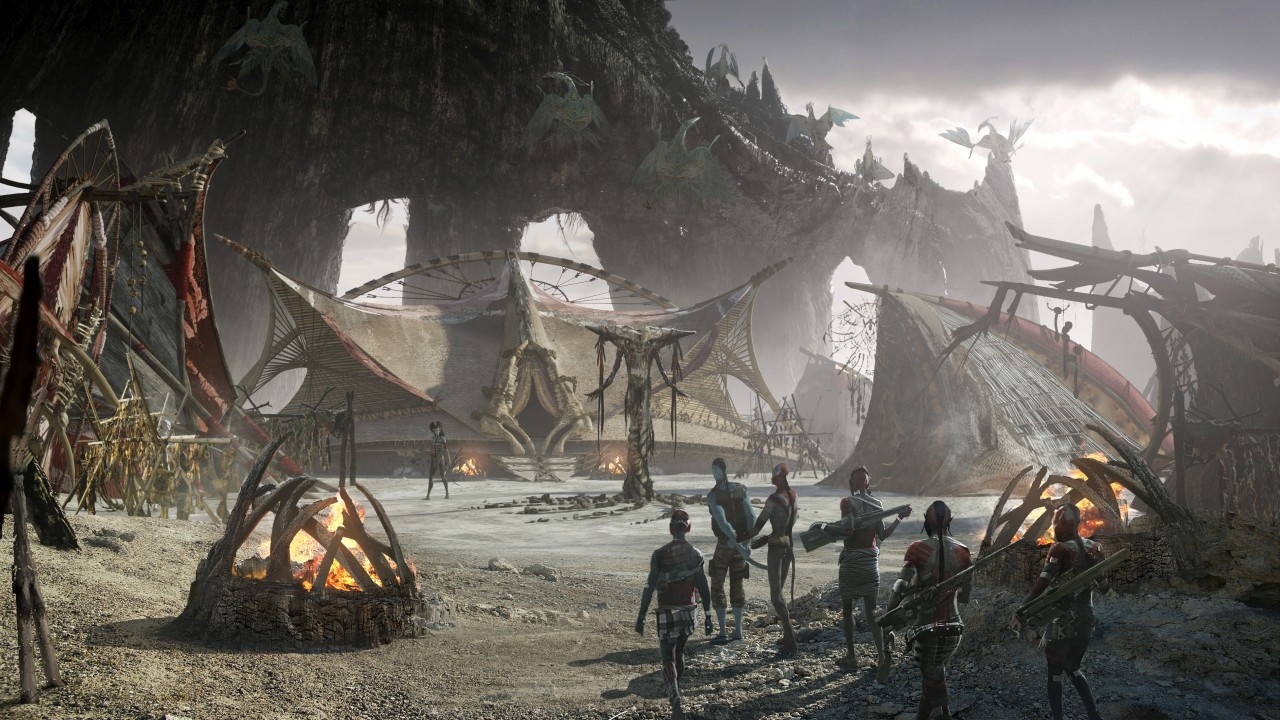
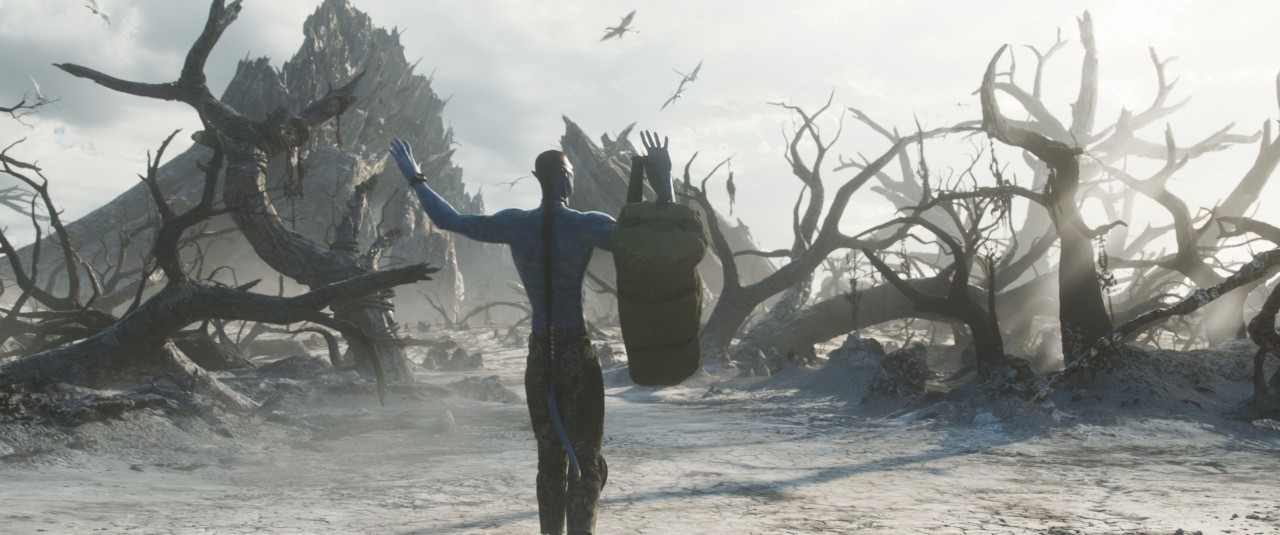
Ideas for the film’s Ash Clan date back to an expedition Cameron took in 2012 to the Challenge of Deep. “It so happened that we did our sea trials offshore of New Britain because there is an unexplored trench there that is five miles deep,” he recalls. “New Britain island is part of Papua New Guinea, so you have a lot of people who are living more or less as they were before they were contacted [by outsiders]. One group was called the Baining tribe. The Baining people have a fire dance, or fire ceremony that we filmed in 3D for the documentary [Deepsea Challenge 3D]. Maybe only 30 or 40 miles from where the Baining are, in the highlands, is the town of Rabaul, which basically got destroyed by a volcano back in the mid-1990s. A volcano named Tavurvur buried the whole town 30 to 40 feet deep in ash. We went over there, filmed that and talked to the inhabitants. The town had moved and grown up again nearby in the subsequent 20-some years. I remember seeing kids playing in this ashen wasteland, with the ash kicked up by their feet backlighted by the sun. I thought, ‘I’ve got fire, ash, a story and a clan here.’ It fit thematically with the idea of the fallen people, or what I thought of at the time was the apostate Na’vi, the fallen Na’vi who have broken with Eywa because Eywa cannot control volcanoes. Eywa is biological; she can control life, evolution, and ecosystems but can’t control asteroid strikes and volcanism. My backstory idea is that Eywa evolved as an integrated network in order to help life rebound from massive insults due to ballistics and geology. So, there’s actually a logic to her emergence as a consciousness.”
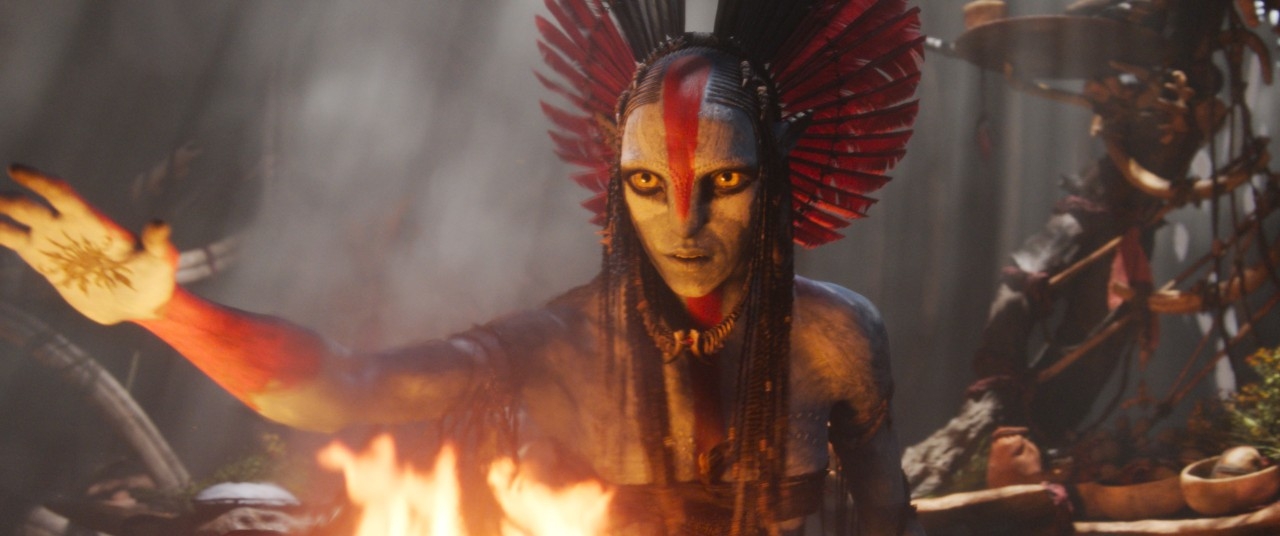
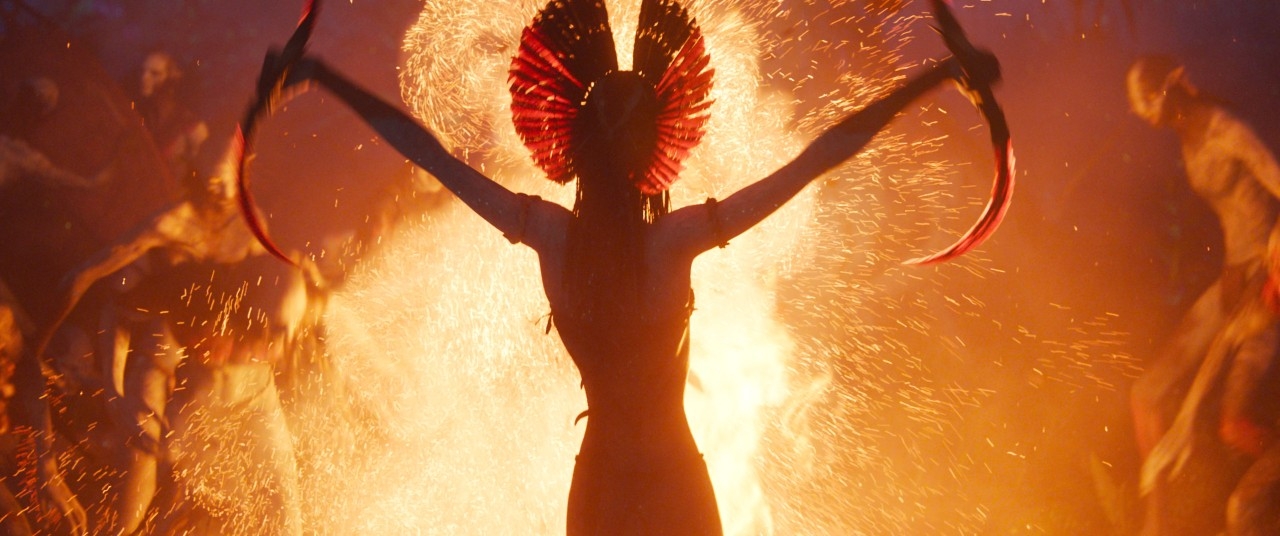
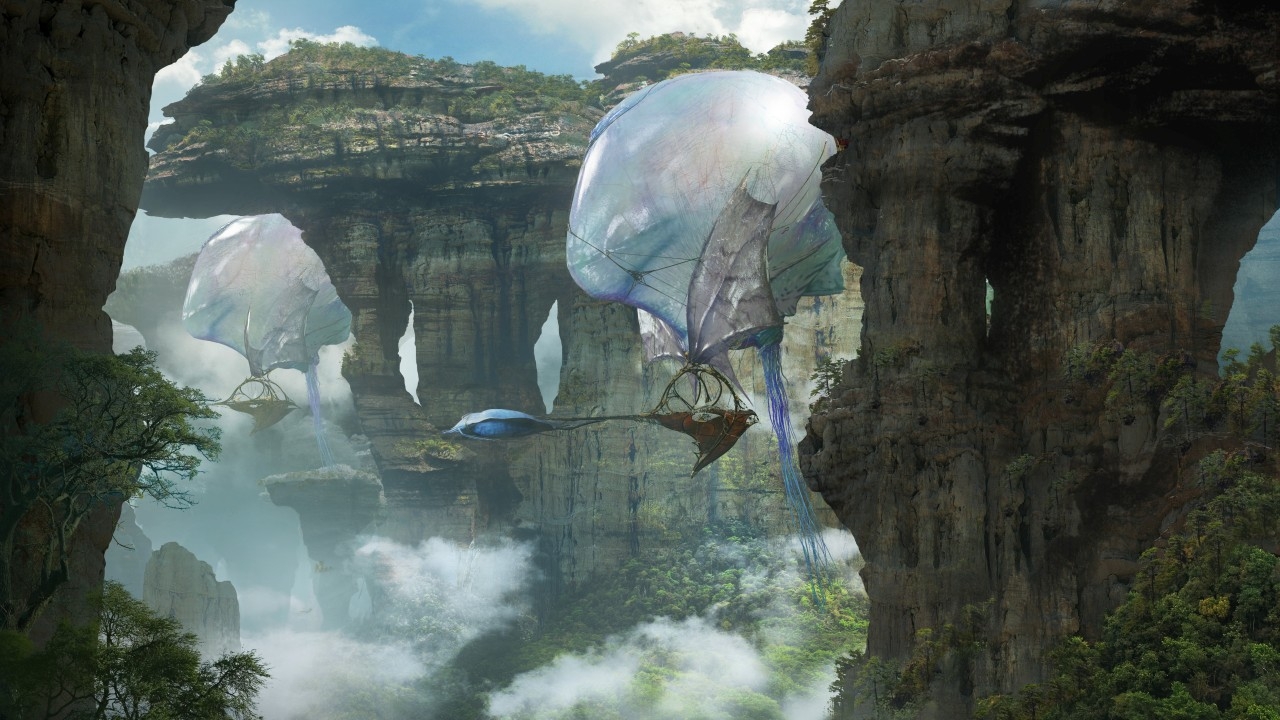
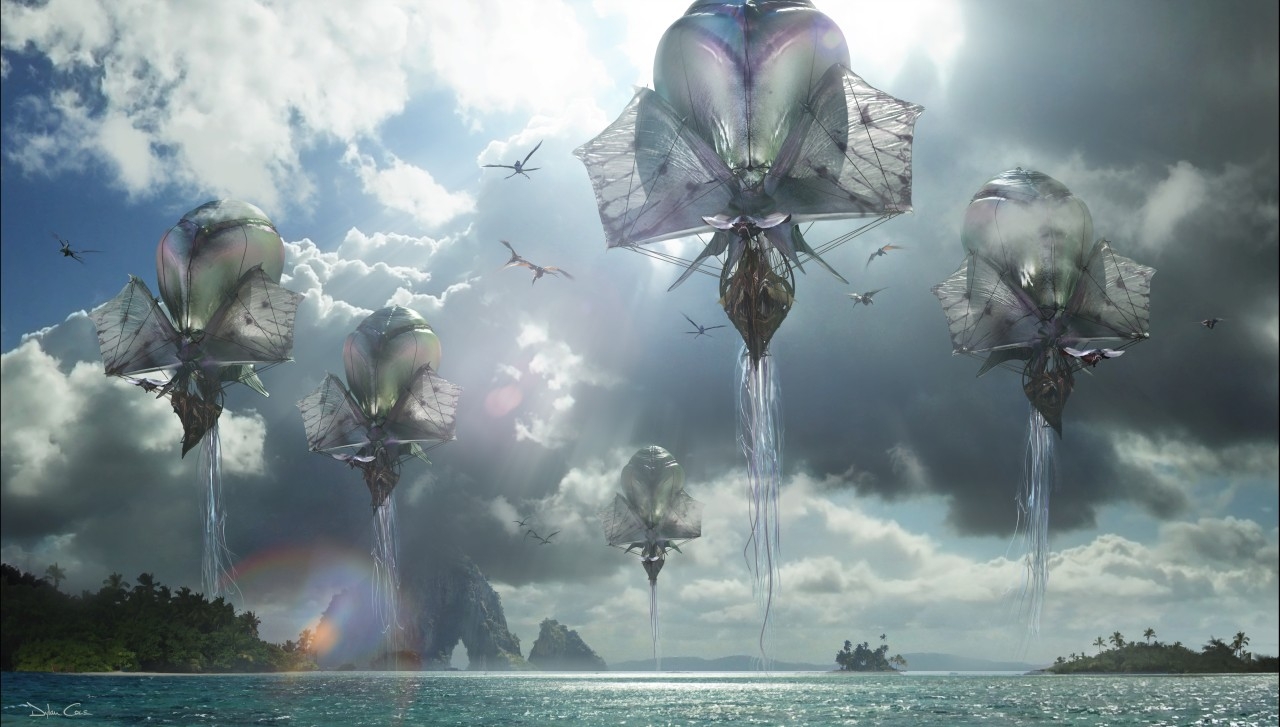
Intertribal warfare sits at the middle of the film’s story. “I wanted to get off this simplistic paradigm that everybody blue is good and everybody pink or brown is bad,” Cameron shares. “Because it’s simplistic. It’s really about seeing a set of values written large in the Na’vi that our better nature can relate to. And then, we create an otherness with the bad humans who are coming and have no guilt about destroying indigenous cultures because, of course, we have all of that right here on planet Earth within the human species. We have the saints, sinners, good, bad and we’re all of that. Adding more complexity on the human side, having positive human characters who you can relate to like Ian Garvin and Spider, and having negative Na’vi characters like Varang and her whole clan.” On the lighter side of things is a clan that travels throughout Pandora via the air. “The Wind Traders are neutral,” he adds. “In fact, their whole thing is neutrality. The Wind Traders go around, integrate, talk to and trade with all of the clans.”
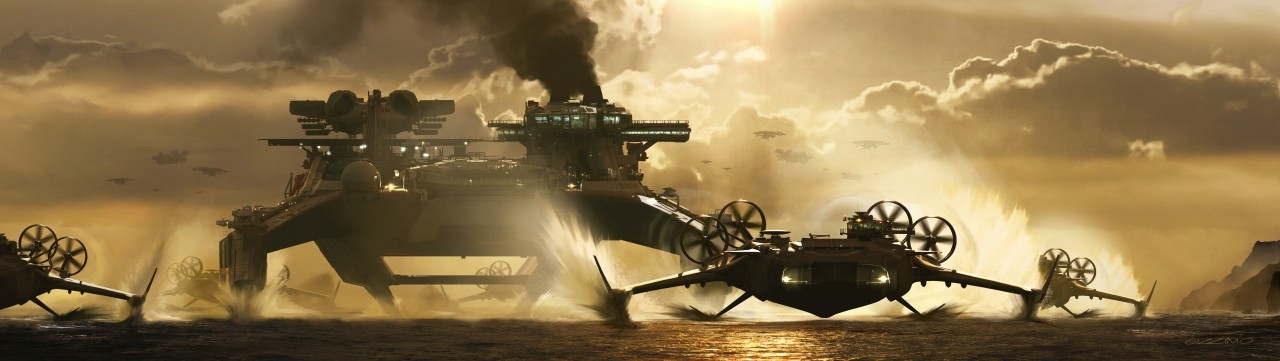
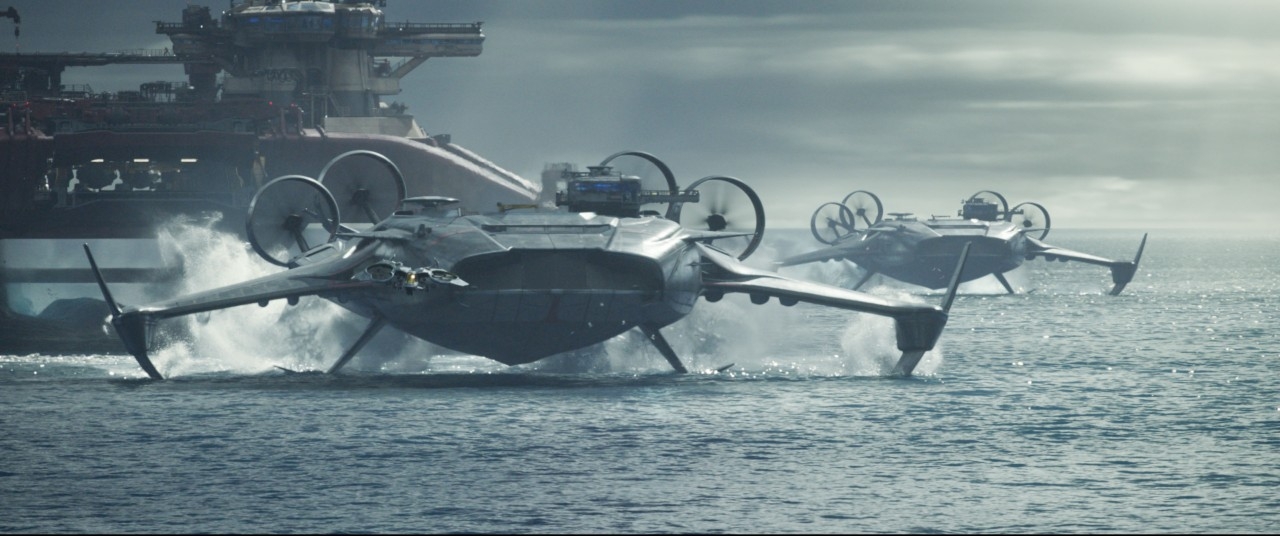
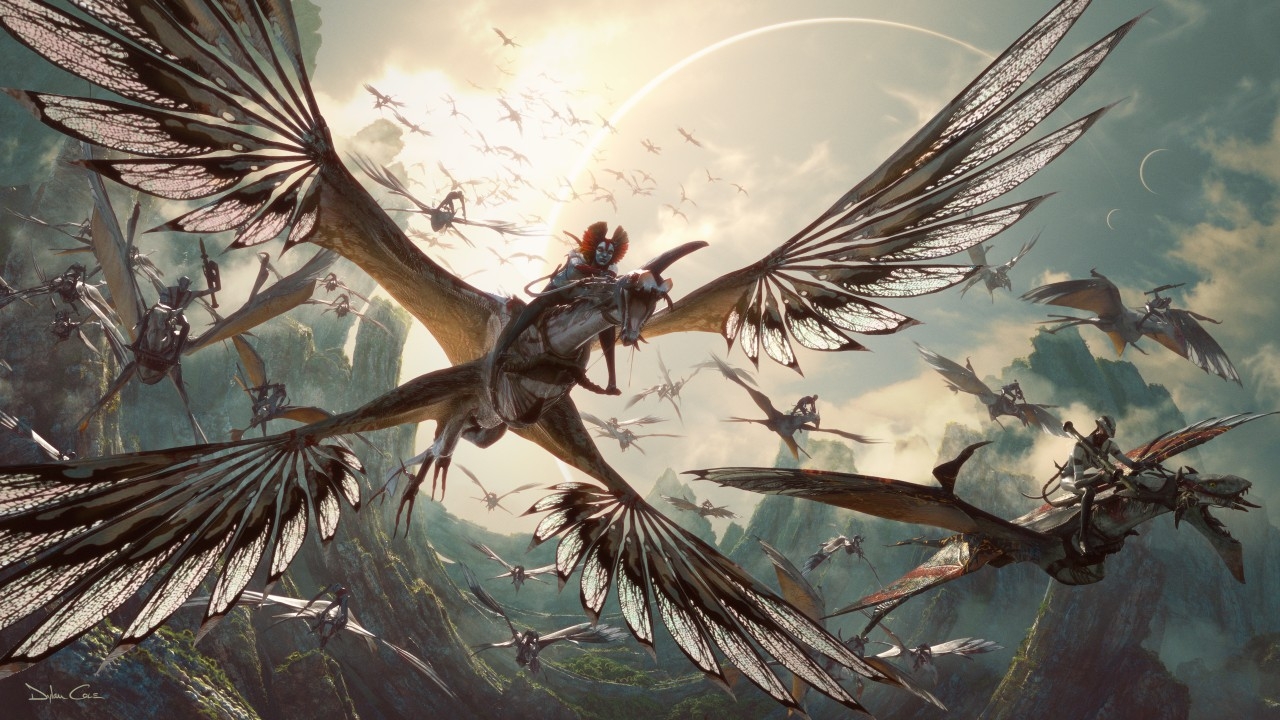
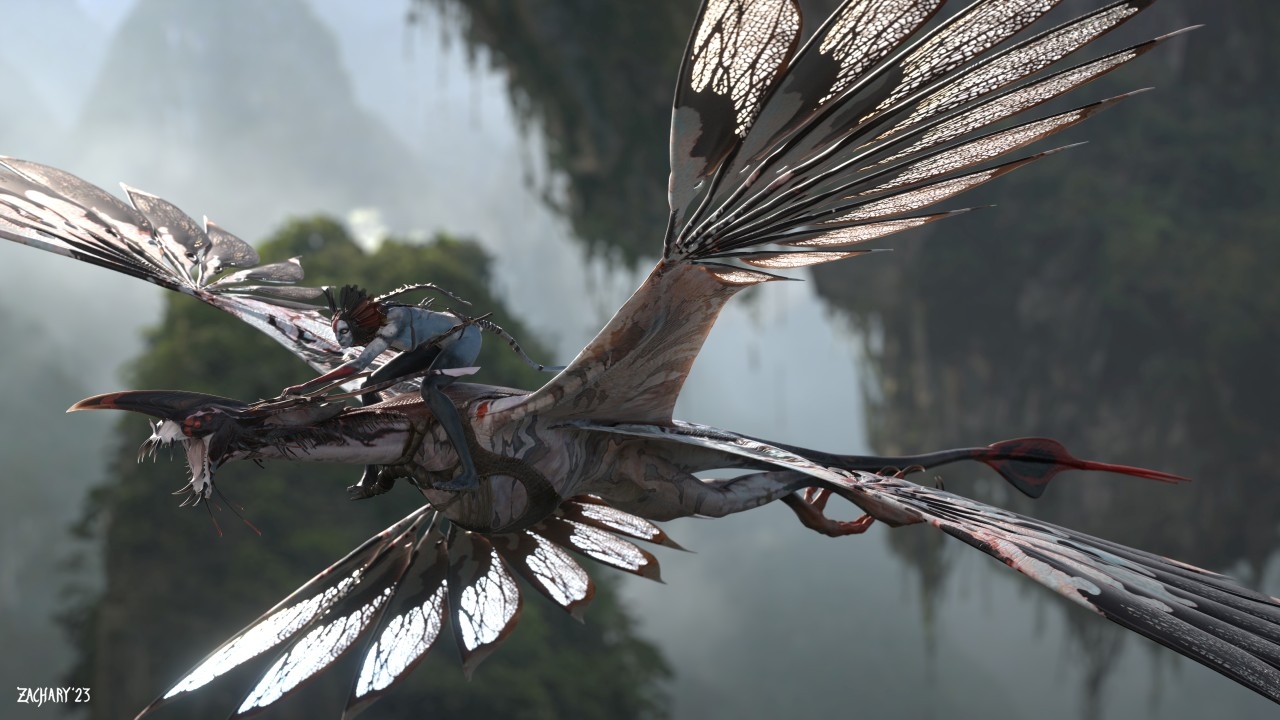
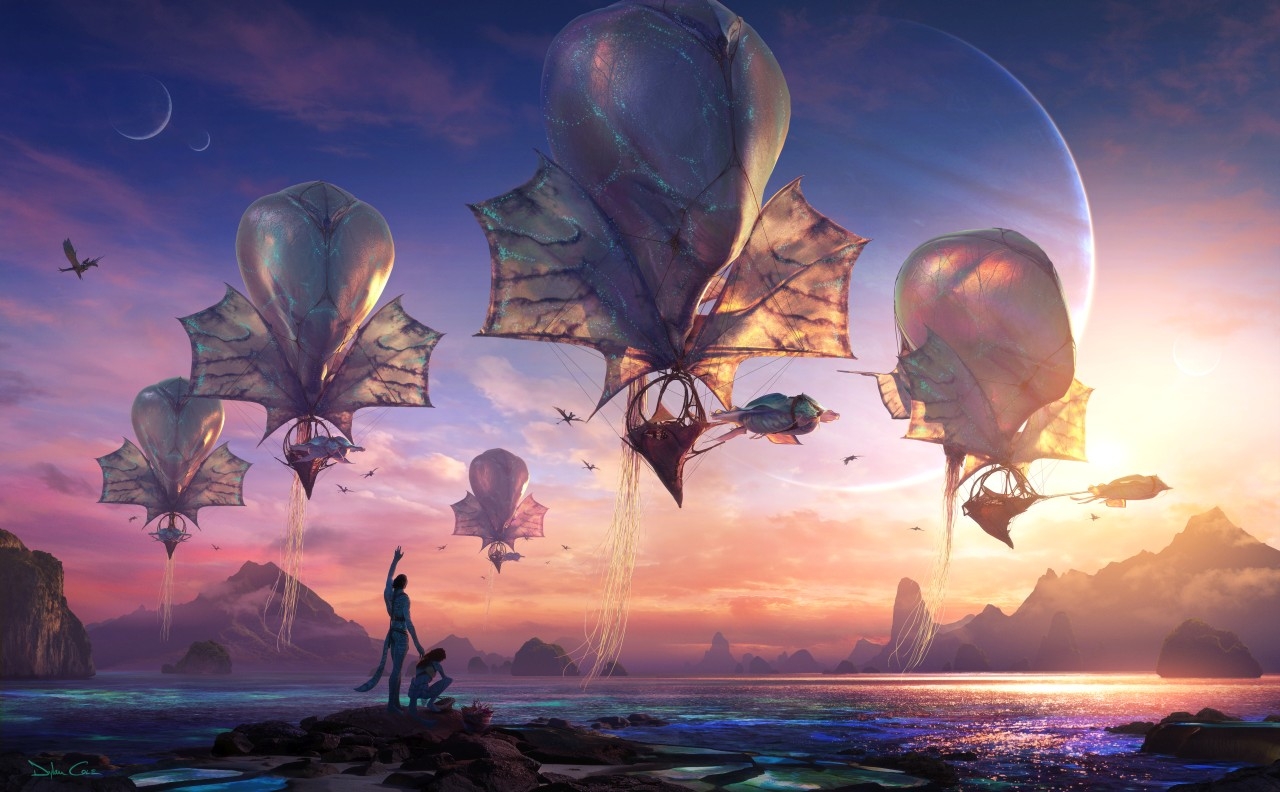
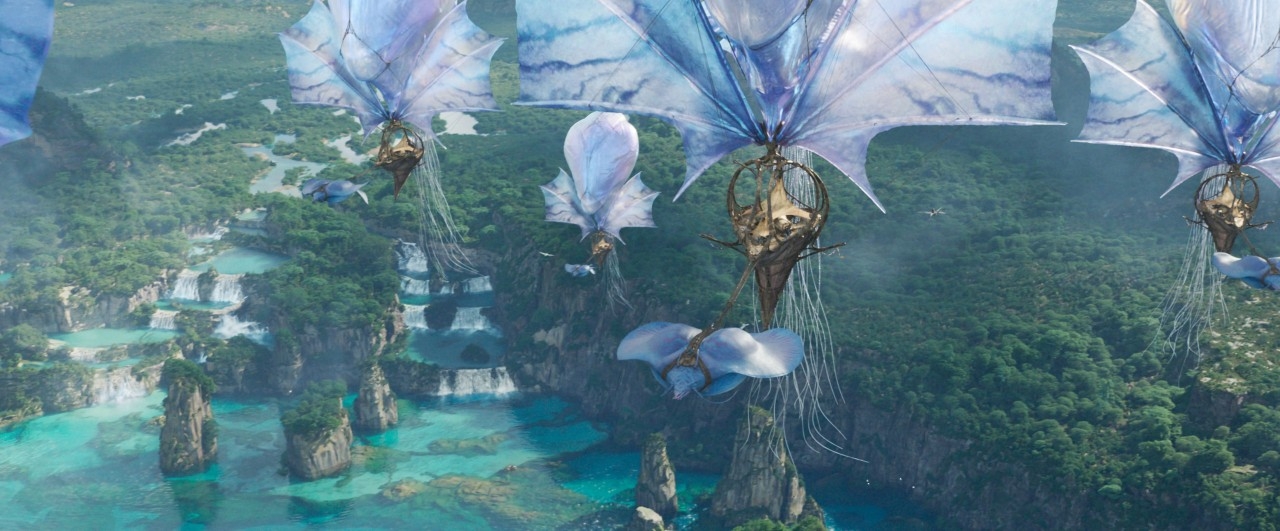
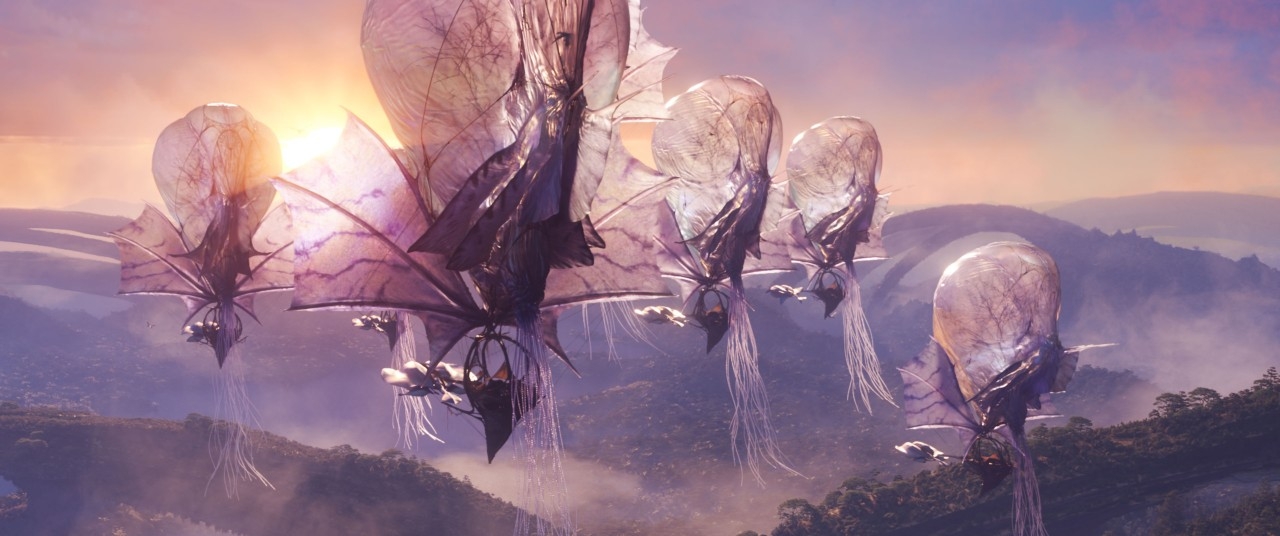
Transporting the Wind Traders are the Medusoids and Windrays. “The Windrays are obviously the tugs,” notes Cameron. “The Windrays bring the Medusoids in and allow them to be tied off and secured so they don’t blow away the Wind Traders while they’re doing their trading. We don’t see this. We actually see one that has been released from its harness and is flying away while the gondola is tied off to a big tree root at the Metkayina village. We give you a little glimpse into the process, but we don’t show them re-harnessing or reconnecting them. We don’t show how they are in caravan mode travelling across the country, and that they have to release them in flight so they can go feed and bring them back and re-harness them. The Windrays are not just tugboats for in-port, but also allow the Medusoids to fly on a vector relative to the wind angle so they can generate some lift. Because of the sailing ship you have a keel and that keel creates resistance. You turn the sails relative to the wind and then you get your specific vector from that. But they’re not able to do that because they have no keel and are not in the water. They’re in the air so they’re in a body of air that is moving. The Windrays allow them to generate a vector for their sail surfaces that are innate to the Medusoids. We had to think about how we were going to sail these things.”
There were no technical challenges in Avatar: Fire and Ash that did not already raise their heads on Avatar: The Way of Water. “It’s not like what’s easier, fire or water?” notes Cameron. “Almost anybody out there can do fire. Not everybody out there can do water. You have somebody standing in the rain or emerging out of the water and their hair is wet and it’s draining out, dripping down their face and body, new raindrops are being added on that and have to converge with those existing flows; that’s an enormous technical challenge. We hacked that eight years ago.” Unlike the Na’vi, who are digitally animated, Spider, played by Jack Champion, is an adopted human son. “A young guy changing rapidly, hormonally fizzing and changing, and body hairs sprouting,” the director states. “We knew that. We shot all of the live-action as one big live-action shoot. It was all shot together. Movies 2 and 3 were all shot together in one live-action shoot. We happened to hit Jack right at the age of 15. If we had to go back and do reshoots, we were screwed. So, we had to shoot everything we could imagine we would ever need. Now we did do a reshoot where we had to make a couple of small adjustments later. But nothing major.”
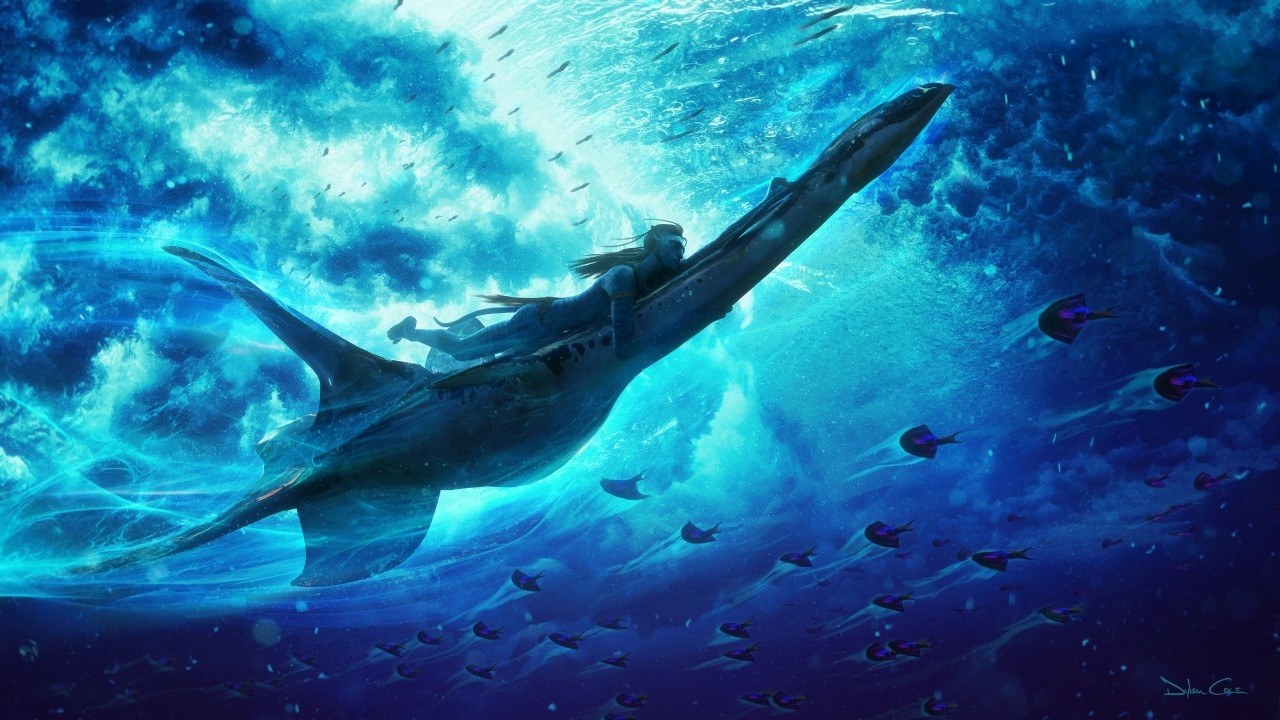
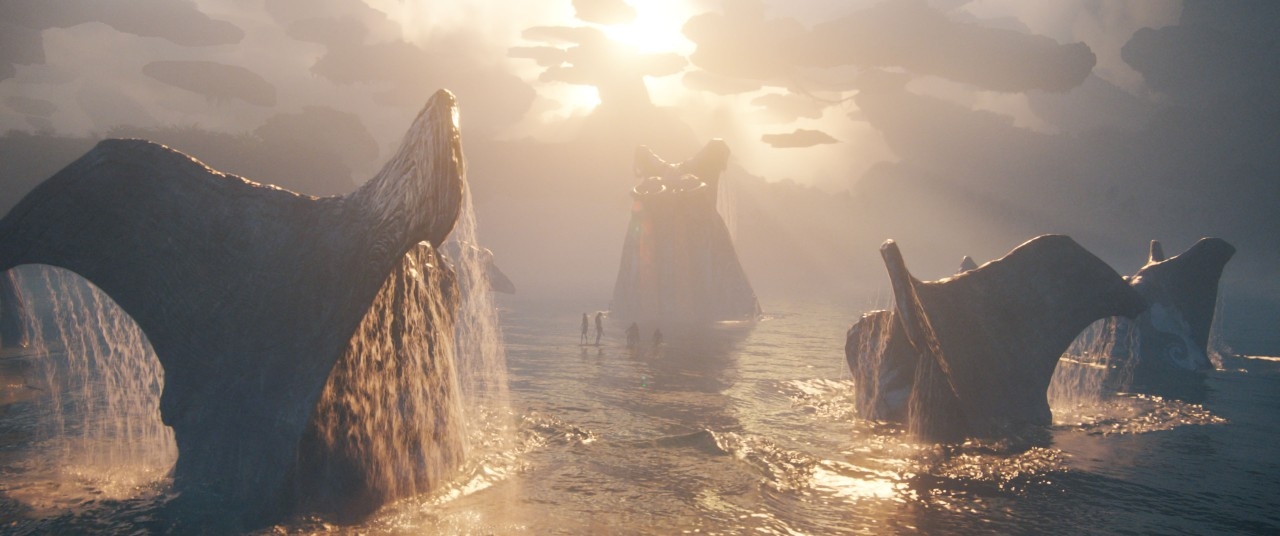
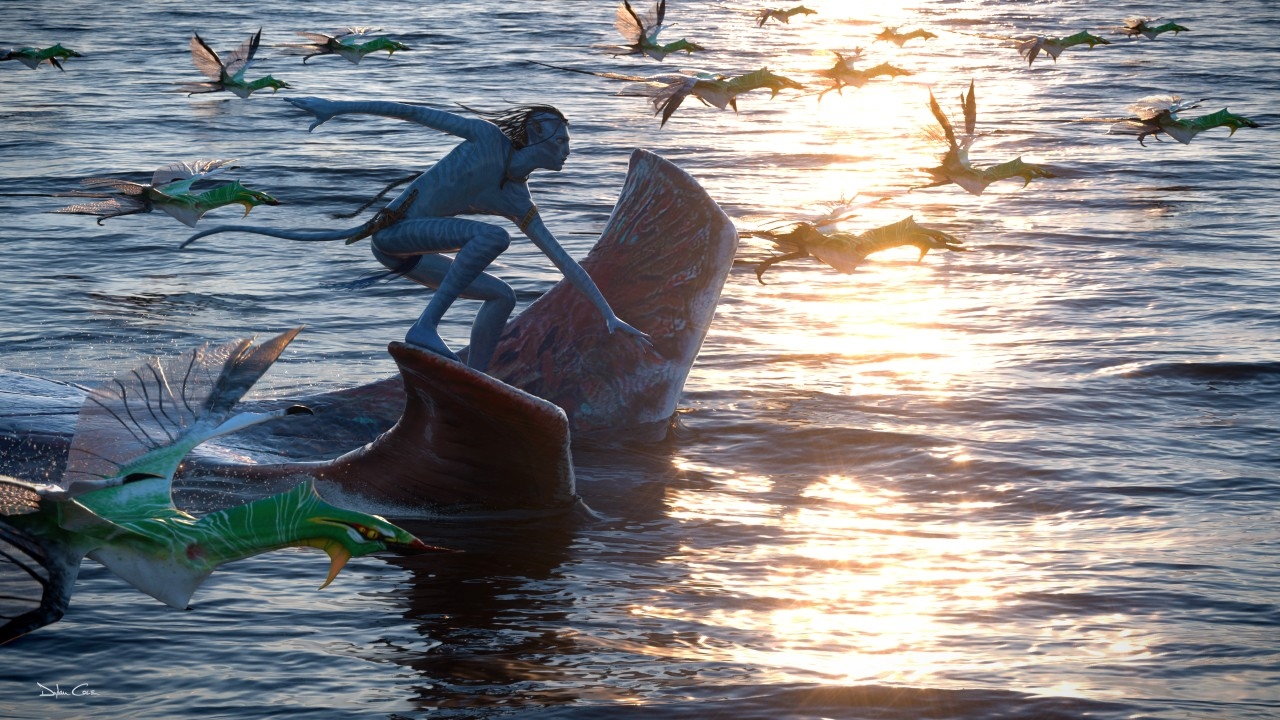
3,500 visual effects shots were produced on the film, with Wētā FX serving as the main vendor, though the role of ILM was increased. “I should point out that ILM did some character work,” states Cameron. “In the past they’ve done hard surface model work for us, and they’ve done some creature work for us. But but we kept them away from the core characters because we put the majority of our R&D development into Wētā FX for the facial pipeline. But ILM convinced me that they had their own mature tools in facial, so we shared the assets of Jake, Quaritch and Neytiri with them and they actually did some character work as well. We’ve done some joint development together on that. But it was primarily on character work for Quaritch, Jake and some Neytiri shots, action shots and dialogue scenes. I wanted to give them something that was representative of what the work would be, and they hit that quality bar that we needed.” Cantina Creative was involved with the screen graphics. “Ben Procter [Co-Production Designer] designed the graphics and Cantina Creative executed them,” the director says. “When we’re in the human space everything is either a hologram or stereoscopic fixed display. Cantina Creative did all of that.”
The key to managing the massive shot load was having scalable processes that could maintain the highest possible quality at mass production rates. “I don’t want to say automated, but it’s a mature enough pipeline that human intervention doesn’t need to be as much as it used to be,” remarks Cameron. “That applies right through to the bake. You get the motion right and then you add the bake. How does the wardrobe flow in the wind or in underwater currents? How is the hair moving in underwater currents? How is the hair responding to wind or rain? It’s a multistep process. Wētā FX basically does all of the simulation portions. But the key for all this is to get the facial algorithm for each performer or actor relative to their final character, get it fine-tuned enough that the animators are mostly hands off. That has taken 19 years to get where we are right now. It’s seamless. If I look at the film right now I don’t even question that these are people and anybody who says it looks like a video game can kiss my ass and show me one video game that has even one tenth of that real veracity in the characters. I’ll give you 100 bucks right on the spot! You can’t do it.”

Trevor Hogg is a freelance video editor and writer best known for composing in-depth filmmaker and movie profiles for VFX Voice, Animation Magazine, and British Cinematographer.