This year, the festival was not quite so overtly political, but it still had an edge to it.
A STORM IS COMING
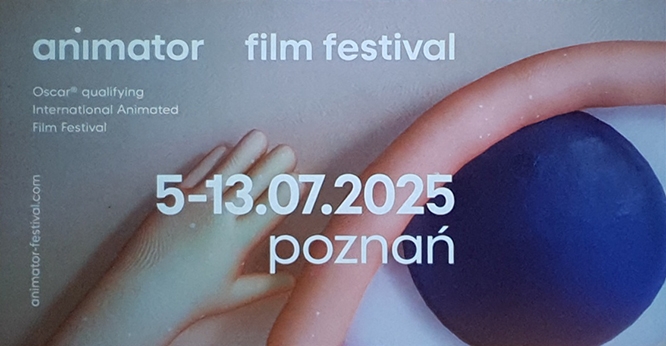
I had not been to Animator for some years, so I was very excited when Nik and I received the invitation for us to be on two separate juries. I remember the festival being very political in previous years. I was in Poznan in 2017 when the theme of the festival was doom, gloom, and war, with the slogan Brothers and Sisters Prepare; A Storm Is Coming and who better to create a trailer on that subject than the late, great Phil Mulloy. He created a different gruesome trailer for every day in his distinctive black and white style, and they certainly got the point across. Given what is going on in the world right now, that could well have been the theme for this year’s festival as well.
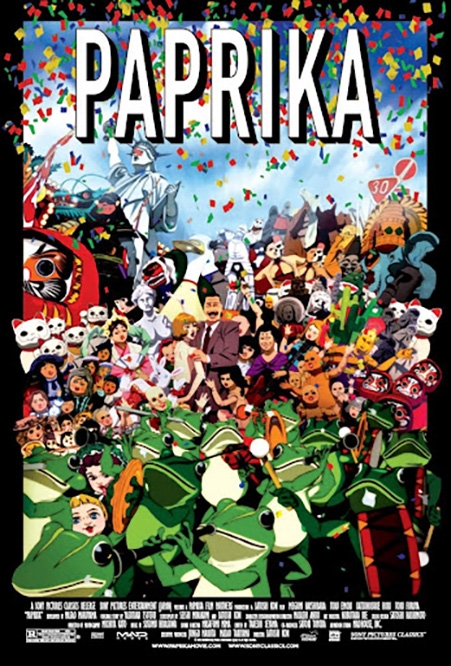
This year, the festival was not quite so overtly political, but it still had an edge to it. With cult classics like the 2006 film Paprika, directed by Satoshi Konand and works by the late Armenian animator Robert Arshavirovich Sahakyants, along with a screening of Emma Calder films, there were plenty of thought-provoking programs with a political bent to them. Guests ranged from Mike Hollingsworth to Rose Bond, who also had screenings and presentations.
A highlight of the festival for me was to discover the work of Armenian animator Robert Arshavirovich Sahakyants at a screening of nine of his short films. His films are playful, surreal, subversive, and psychedelic. It is obvious from his work that even though he lived in a Communist country, he was familiar with modern Western music, listening to funk and The Beatles instead of Russian music.
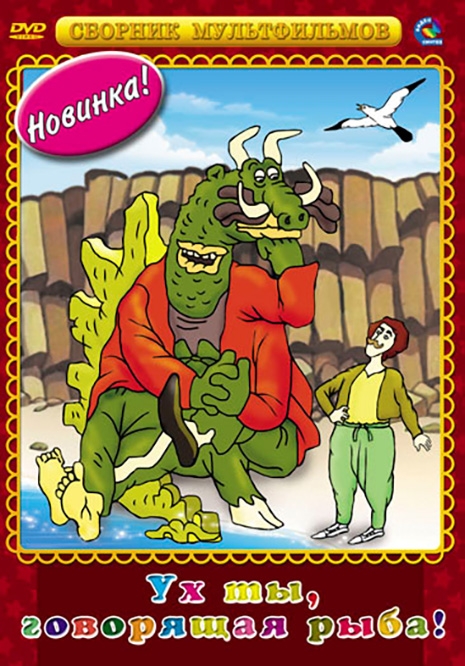
The screening opened with his 1983 Hey, Talking Fish, based on an Armenian fairytale. It is a cheerfully deranged ten-minute film based on an Armenian fairy tale about a poor elderly fisherman, a talking fish, and the most psychedelic wizard you will probably ever see on film.
In his 20-minute film Nazar The Brave (1990), the idler Nazar, who only counted the number of flies that he had killed, suddenly sits on the royal throne as a result of the ignorance of people and the guile of the local priest. This film felt all too current to me.
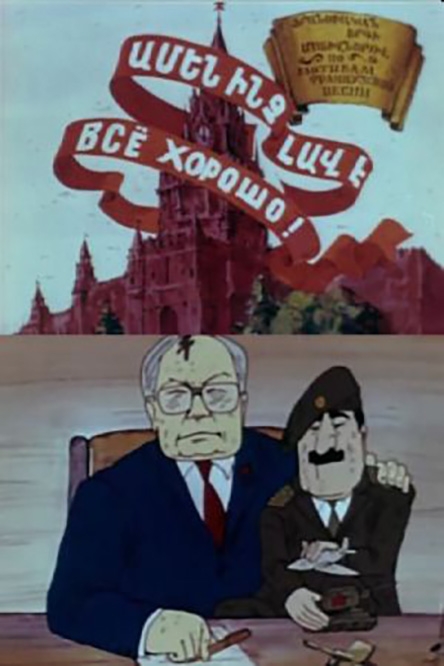
My favorite film, in a program where I enjoyed every film, was the 1991 Everything Is Fine. The 4-minute political satire on the last years of Soviet Russian rule over Armenia makes fun of several well-known Soviet leaders. The film is based on a popular Russian song from the 1930s.
Sahakyants died in 2009, but his legacy lives on at Sahakyants Animation Studio, founded in 2010 by his three children. To continue their father’s important legacy to Armenian animation, in 2018, the studio began a school where more than 60 students have already completed their studies.
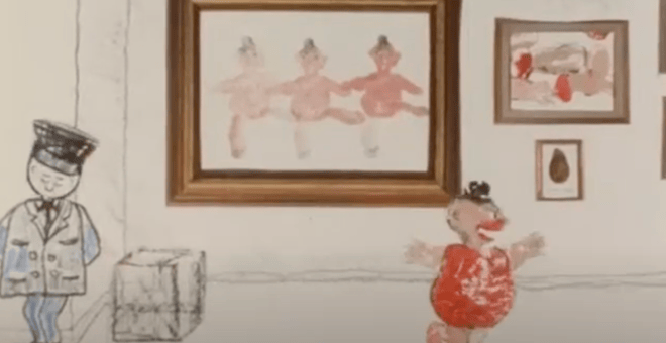
A heartwarming tribute was paid to the late multi-talented Emma Calder, who passed away in September 2024. Remembering Emma Calder presented 13 of her multiple award-winning films. One of my favorites of her films is Madame Potatoe. The six-minute film is about the pressure society puts on us to project different images, especially the image of success. The film, created in 1983 while Emma was studying at the Royal College of Art, is political, feminist, subversive, funny, and has become a cult classic. Emma’s voice is definitely missed in the animation world.
Mike Hollingsworth was Supervising Director/Co-Executive Producer on all six seasons of BoJack Horseman. He presented a special screening of three BoJack Horsemen episodes, including the 26-minute Fish Out Of Water episode, which won a 2017 Annecy Cristal. It was also voted the number one episode on television by Variety and Time magazines that year. On BoJack Horseman, he did some of the writing and most of the animal gags as well as voices.
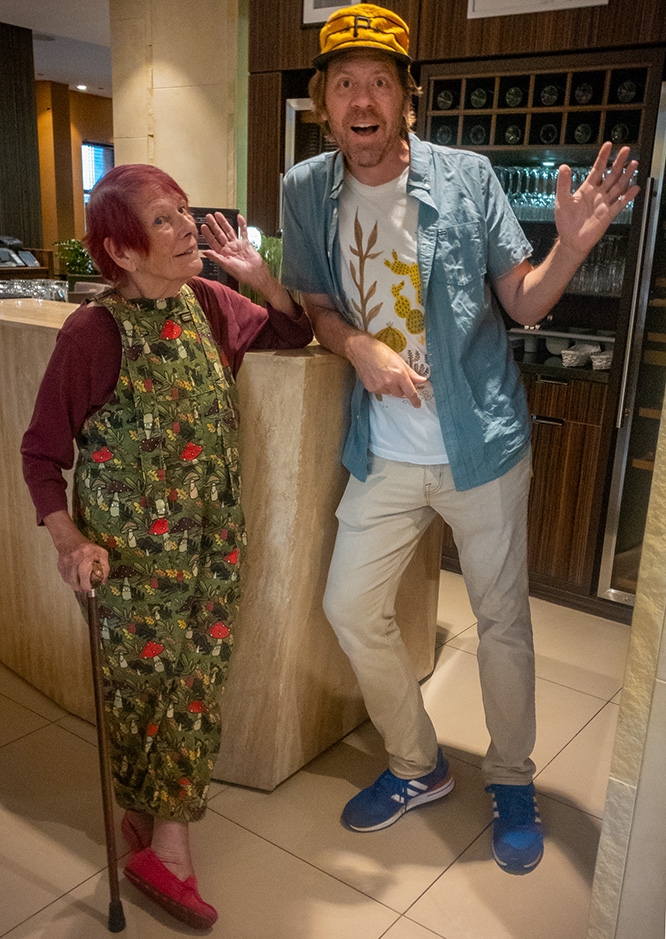
A Peak Inside Mike’s Shorts offered a look at Mike’s independent short animations along with his live commentary on them. He included the never-before-seen work from his time at Netflix, where he was an EP on Inside Job and EP/writer/supervising director for Cat Burgler. As breakfasts at the hotel where the guests were staying taught me, Mike has a wicked sense of humor.
It was a pleasure to get to know Canadian-born media artist Rose Bond, who now lives in Portland, Oregon. Beginning with frame-by-frame, hand-drawn animation, she is now known for her experimental animation and public media performances as well as work with VR.
Her recent works include large-scale, multi-screen live projections for symphonies with works by avant-garde composers Luciano Berio’s Sinfonia (2020) and Olivier Messiaen’s Turangalia SYMPHONIE. Rosa’s paint-on-film animations have been screened at international festivals and are in the MoMA permanent collection.
At Animator, Rose screened eight films ranging from the 1982 film Gaia’s Dream to the 2018 film Electroflux. Gaia’s Dream begins with images from the beginning of time, where a running horse emerges, taking flight and then disappearing back into the sun from where it came. The 2008 Electroflux is a voyeuristic and personal glimpse into an animator’s process as a struggle of creative malaise takes place.
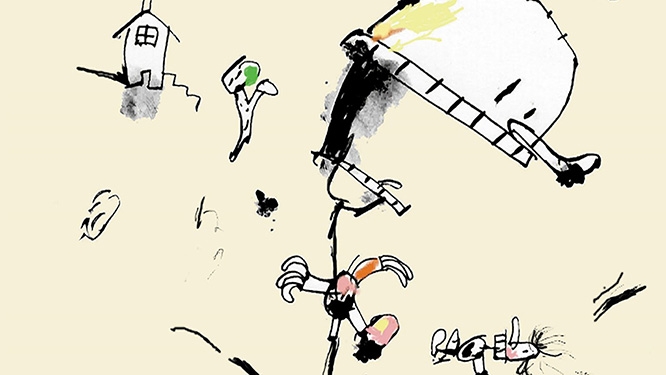
All over Poland, old factories are being repurposed into multi-use spaces. In Poznan, an abandoned brewery has been transformed into a Galeria with restaurants, a shopping mall, offices, meeting rooms, and exhibition spaces.
The festival’s VR presentations were held in a large room at the Galeria. Rose Bond’s VR titled Earths To Come was installed there. It was inspired by the poetry of Emily Dickinson. A moving story about community, the body, and the future, it was originally presented at the Venice Art Biennale in 2024.
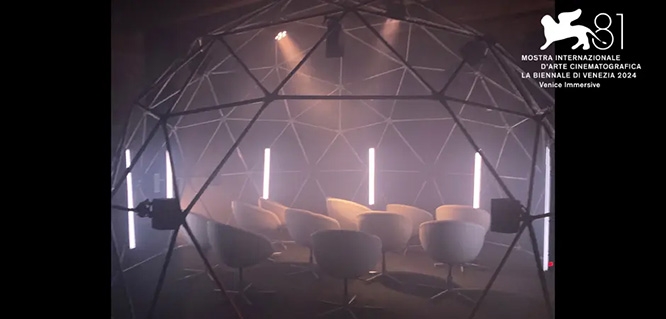
The VR was designed as a communal experience for groups of 12 people seated inside a six-meter geodesic dome wearing synced VR headsets. The group was then surrounded by a sophisticated spatial sound system with sixteen speakers that immersed them in a shared soundscape. The idea is to dissolve the typical solitary VR experience by creating a group experience.
Unfortunately, the dome was not at the festival, so my viewing was a solitary experience. Also, the sound didn’t seem to be working quite correctly. I did enjoy the pencil-drawn animation. Rather than simply illustrating the poem, Rose has used motifs from the poet’s home, her handwritten drafts, and the landscapes of 1960s Western Massachusetts to convey the poet’s words and emotions.
It was a nice surprise to get to see the documentary History, Mystery, and Odyssey: Six Portland Animators. Martin Cooper’s 91-minute film is about six Portland, Oregon, independent animators: Jim Blashfield, Rose Bond, Joan C. Gratz, Zak Margolis, Joanna Priestley, and Chel White.
Between the group, their work spans over 40 years. Although they explore diverse mediums, ranging from hand-drawn films and stop-motion to computer-generated films, they all share a passion for animation and are active members of Portland’s thriving animation community. Through interviews and clips from their films, the six share with the audience their work process as well as their lives.
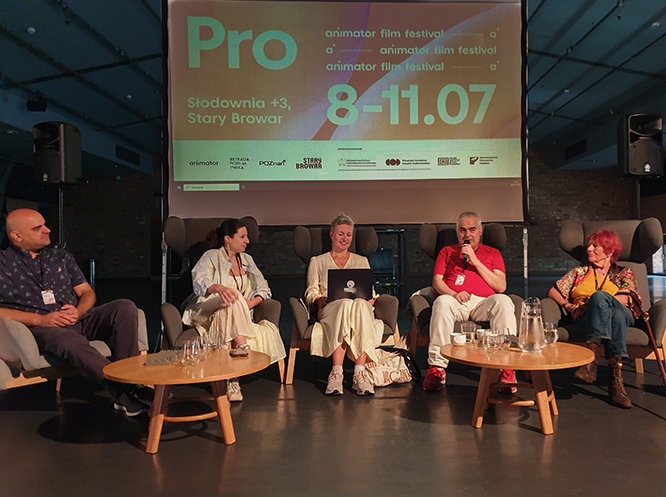
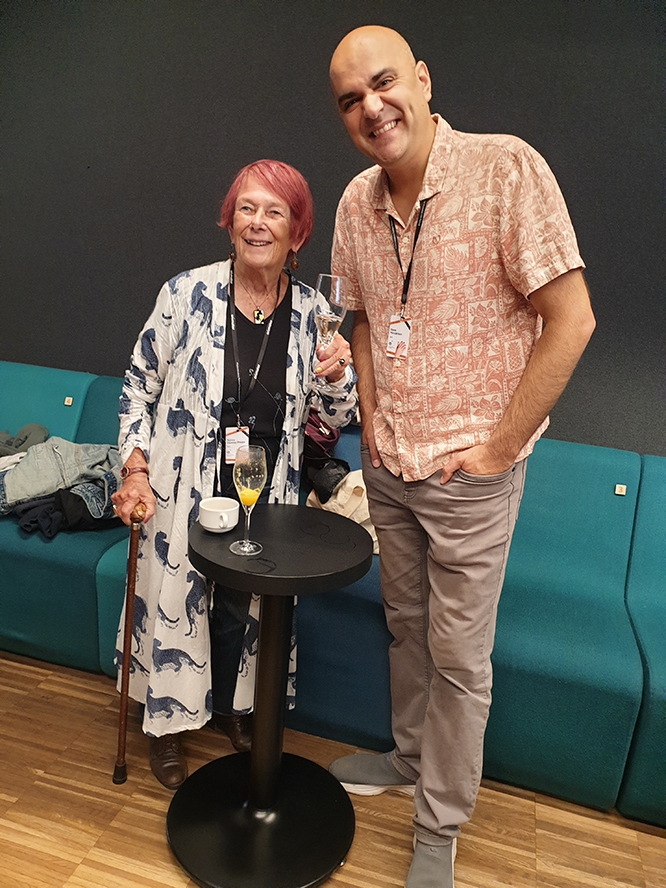
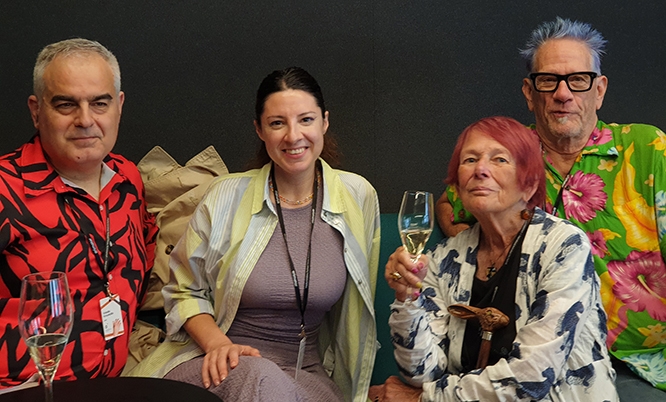
Finding four animation journalists at most festivals is a rarity. This year, Animator hosted Diana Martirosyan from Armenia, who represented FIPRESCI (The National Organization of Professional Film Critics and Journalists), Steve Henderson, who is editor of Skwigly Animation Magazine from England, Vassillis Kroustallis, head editor of Zippy Frames, who lives in Estonia, and me. In addition to serving on separate juries, we four participated in a panel discussion on "How to Write About Animation." Our moderator was Festival Artistic Director Adriana Prodeus. It was interesting to hear my fellow journalists talk about their individual writing techniques, and we shared some tricks of the trade with the audience. We also all voiced our opinions on such topics as why short films are getting longer and the difficulty of programming 20-minute films.
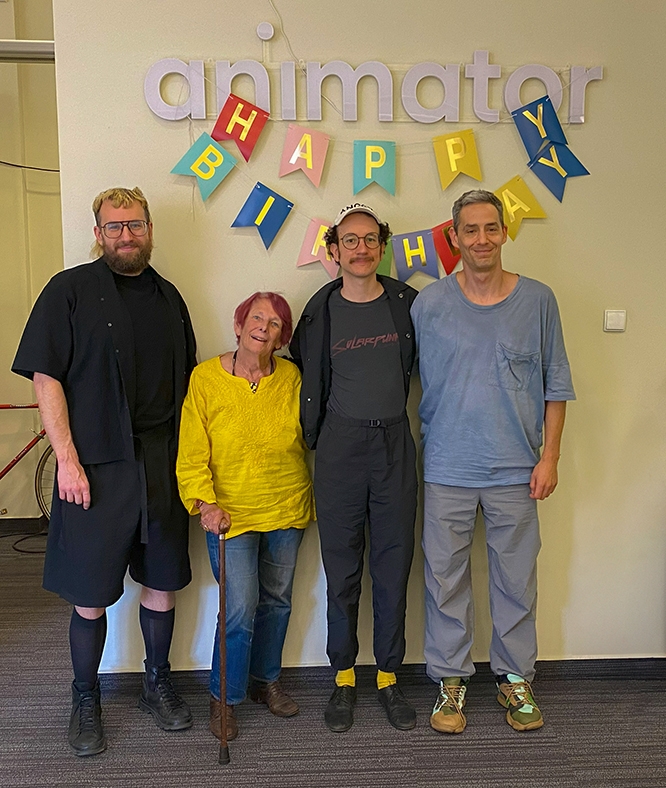
I was on the Open Call Jury along with Robin Klengel and Michael Stumpf from Total Refusal. The Vienna collective, a pseudo-Marxist guerrilla group, appropriates and upcycles contemporary video games and writes about games and politics. Rounding out our jury was Milosz Marganski, animator and head of the Department of Animation at the University of Fine Arts in Poznan.
The concept of the Open Call Competition is very interesting. The selection of films is based on an open submission call for films thematically connected to the festival’s theme. This year, the theme was Rotamina -The Chemistry Within Us. In its call for animation, the festival invited animators to submit films that “explore the secrets hidden within our bodies and to examine them through the microscope of animation. Rotamania – The Chemistry Within Us is an invitation to reflect on the cellular-level processes that have global societal implications. From a microscope slide to the global opioid epidemic, from tiny particles to physical addiction”.
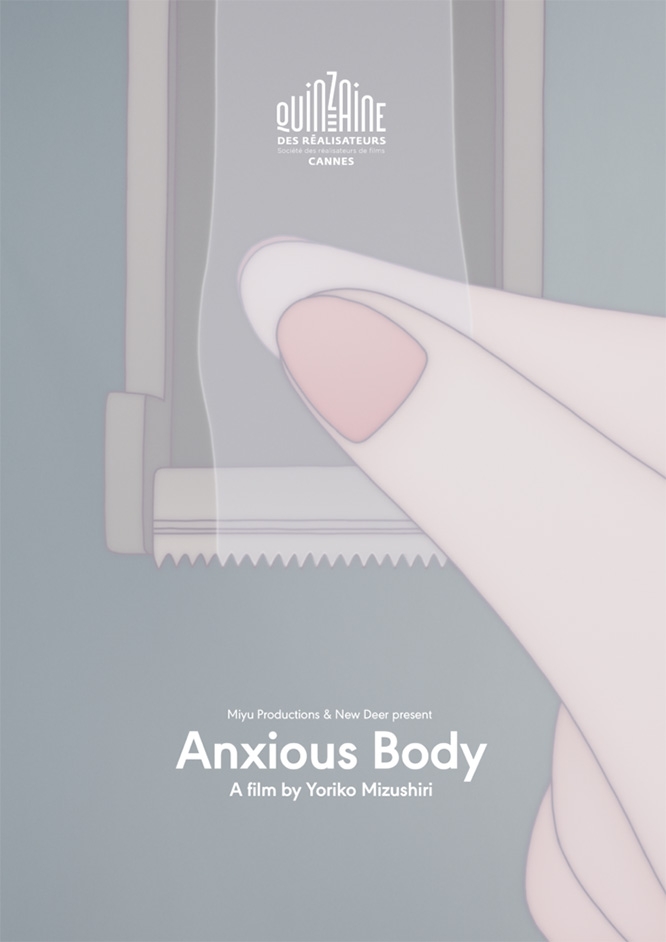
We watched 25 films and had an excellent, lengthy discussion about our favorite films. In the end, we awarded our prize to Anxious Bodies by Yoriko Mizushiri. The joint Japanese/French co-production offers innovative perspectives on body parts and bodily sensations. In the 5 ½ minute film, a finger emerges to pull a piece of tape from a dispenser, the tape sticks to the finger, which initiates a series of interactions between various objects and beings. The tape pulls to attach to the forked tongue of a snake. The snake gets severed by the tape dispenser. A hand clicks a mechanical pencil to extend the lead to an extreme length that takes the shape of a syringe ready to inject, a finger presses against tennis racket strings, and the snake glides through shapeless fingers. The film depicts the succession of moments that we repeat over and over in ordinary life, but they are never the same, and everything changes and wavers.
In giving the award, the jury said, “Our award goes to an extremely tactile film that keeps the viewer entertained by being both alien and familiar by casting human skin as its main protagonist. This film leaves the audience with as many questions as it answers”.
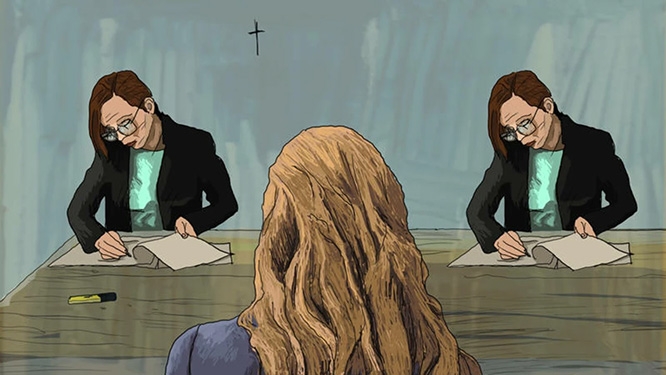
We also gave an Honorable Mention to And Don’t Call Me Crazy. In presenting this award to Dorota Skupniewicz from Poland, we felt that “The film courageously faces the social stigma and exposes the many issues facing people experiencing mental health difficulties, both personal and systemic. It is the most personal film in the category”.
The festival had three main sites where films were screened. The Kino Muza has three screening rooms and the Apollo has two, while the Scena Quadro is an open-air screen in a large passage in the old town center. It has a permanent canopy over part of the passage, so it is partially protected from rain.
Kino Muza was founded in 1908 and has been in continuous operation ever since, making it one of the oldest cinemas in Europe. The last time I was at Animator, the theatre did not have air conditioning, and it was very hot in the screening room. The entire cinema needed work. This year, I was happy to see that the Kino Muza had had a facelift. The lobby was bright and sparkling, and you could wait for your screening and enjoy something from the refreshment counter on comfy couches. An upstairs area with tables and benches is a lovely addition to the theatre, and air conditioning has been installed. Happily, the two-person couches in the back row of the main screening room were still there because that is my favorite place to sit.
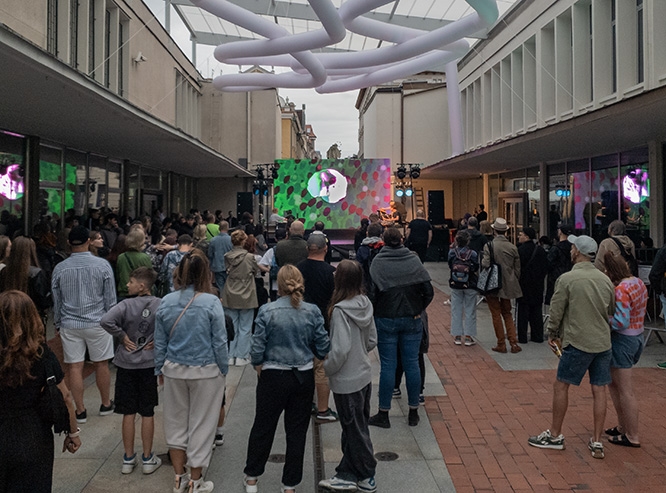
The Scena Quadro was where music videos were screened. At night, there was live music and DJs to dance to. One night, there was a silent disco. On the last day of the festival at the outdoor space, there was a screening of Christiane Cegavske’s beautifully animated 71-minute film Blood Tea and Red String. The film is a surreal stop-motion fairy tale for adults that was created entirely by Christiane herself over a 13-year period.
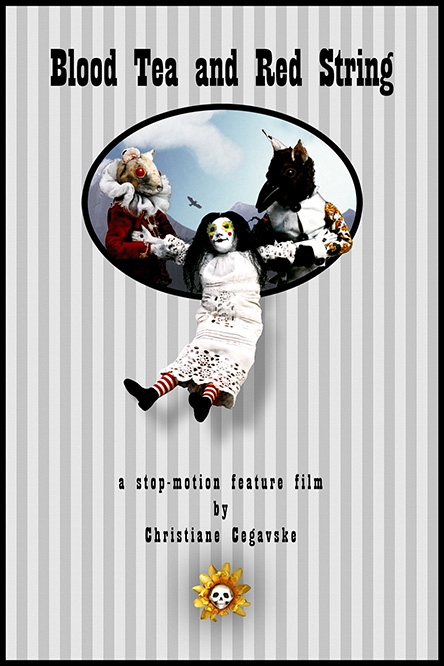
The film tells the story of aristocratic white mice who commission gentle oak dwelling artisans to create a doll for them. The Oak Dwellers create a beautiful doll whom they fall in love with and refuse to give up. Desperate to have the doll, the mice steal her in the middle of the night. Can the Oak Dwellers journey through their mystical and dangerous land to reclaim their beautiful doll? The film holds the answer.
Since the film has no spoken soundtrack, it is ideal for live music to be performed to it. Years ago, when we still lived in San Francisco, Nik wrote a lovely score, with Christiane’s permission, to a small portion of the film that was completed at that time. He performed it live with his musical ensemble, The Sprocket Ensemble.
I would have loved to have heard what Zuza Wronska and Maja Laura performed to the film. Zuza is a composer and singer. Maja plays the synthesizer and also sings. Unfortunately, we could not be there. Since the awards ceremony was the day before the festival had bought our tickets home for early Sunday afternoon.
The Scena Quadro stage was also the setting for A Picnic with Nancy, which is the name that the festival gave to my book presentation. The audience got to sit in comfy deck chairs while they listened to the interview.
For an hour, Nik and I had the pleasure of chatting with Anna Antonina and Filip Kozlowski, Festival Head of Programming and Competition. I have known them both for many years, so they asked Nik and me excellent questions, and the talk was great fun. Thank you, Anna, Filip, and Animator for planning such a delightful book presentation for Nik and me.
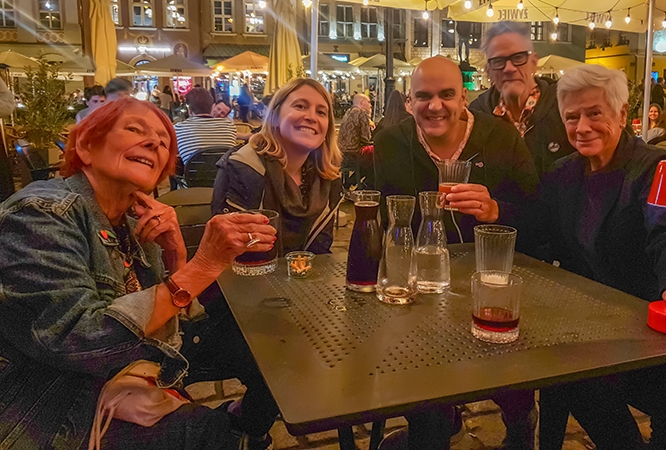
Klub Serce, located on the main square, was the official festival late-night hangout. Along with the DJs, there was a pub quiz one evening. Unfortunately, it was only in Polish. Another evening, there was a karaoke night with a fun twist. It was a tribute to iconic songs from popular animated films hosted by the incomparable drag queens Sowa and Arta De Vil. You could also sit at a table outside the club and watch the world go by on the square.
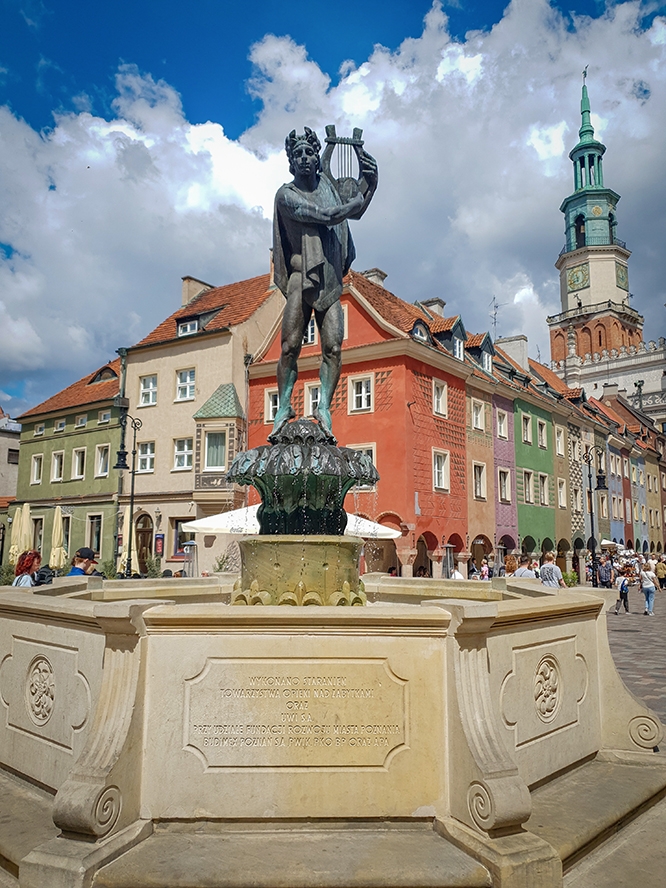
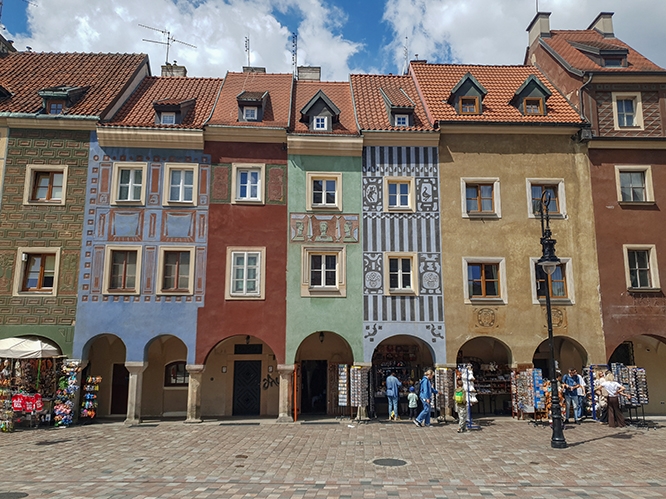
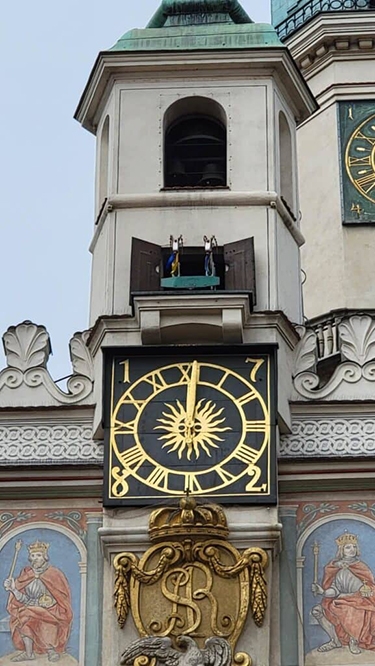
Poznan is a beautiful city on the Warta River in Western Poland. The Town Hall clock features two mechanical goats, the symbol of the city, that butt heads once a day at noon. The tale of the Poznan goats dates back to the mid-16th century, when a devastating fire destroyed the Town Hall. The city authorities rebuilt the building and commissioned a grand clock to showcase Poznan’s wealth and importance. To celebrate the installation of the clock, a grand feast was planned.
As preparations for the feast were underway, a young kitchen boy named Pietrek was given the job of basting the roasting leg of venison, the centerpiece of the banquet. Pietrek left his post to take a quick look at the crowds in the square. While he was gone, the roast fell into the fire and was ruined. Attempting to avoid punishment, the boy ran to a nearby meadow, captured two goats, and brought them back to the kitchen in hopes of substituting them for the burnt roast.
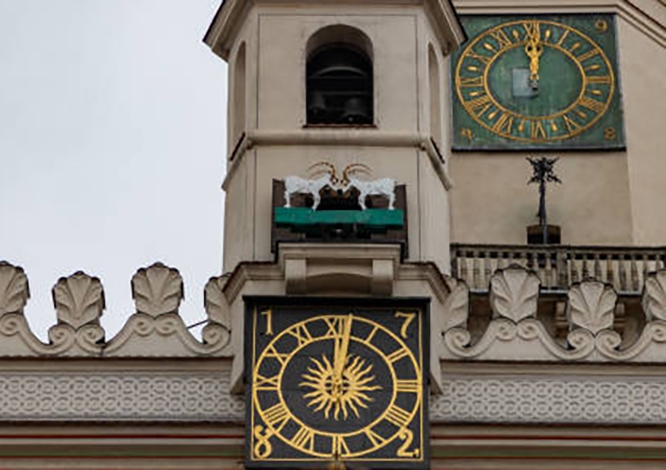
The goats escaped from Pietrek and ran up the tower steps, where they began butting heads. The sight so amused and entertained the crowd that the mayor forgave the lad and commissioned a mechanical clock with the two goats.
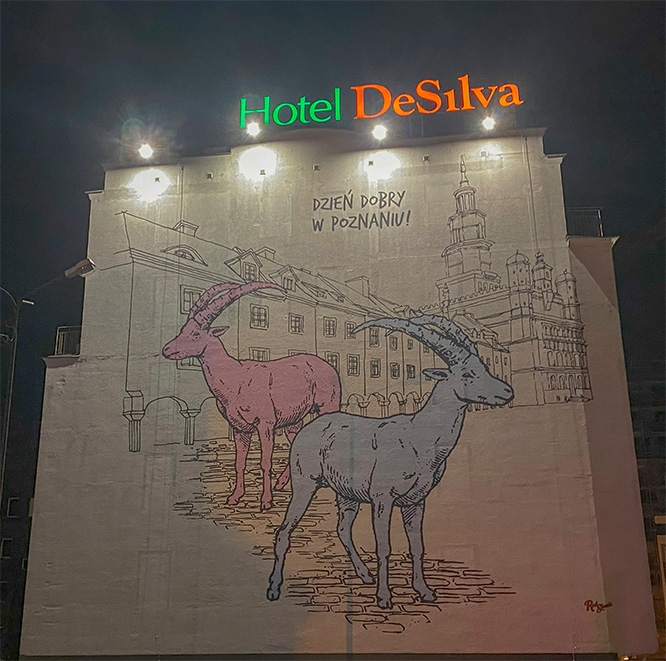
I don’t know if this legend is true or not, since I was not there when this all was supposed to have happened, but it is a good story, and the beautifully crafted goats are amazing to watch and draw a crowd to the square every noon.
I have an extremely warm spot in my heart for Animator and Poznan, and I always look forward to visiting the festival. A big thank you goes out to Filip Kozlowski for arranging my visit to the festival. A very special thank you to Anna Antonina for making sure that I was always at the right place at the right time and for lots of good conversations, so we could catch up since we last worked together at Animarkt last year.
Festival Artistic Director Adriana Prodeus has been involved with the festival since its first edition in 2008, and in 2023, became Artistic Director. She has announced that she is stepping down at the end of this year’s edition. The new Artistic Director has not been announced yet. Every new director makes changes in a festival when they take over the reins, but I have faith that the Oscar Qualifying festival will remain the same high-quality, warm, and welcoming place that it has always been.
The next edition of Animation will take place from 4 – 12 July 2026.
You can find out more about the festival and how to submit your film at: animator-festival.com
LIST OF AWARDED FILMS