VFX supervisor and Oscar-nominee Michael Ralla discusses the challenges of ‘twinning’ brothers Smoke and Stack, both played by Michael B. Jordan, and recreating Mississippi – and its fields of cotton - in Louisiana, on Ryan Coogler and Warner Bros.’ horror drama, just nominated for a record 16 Academy Awards.
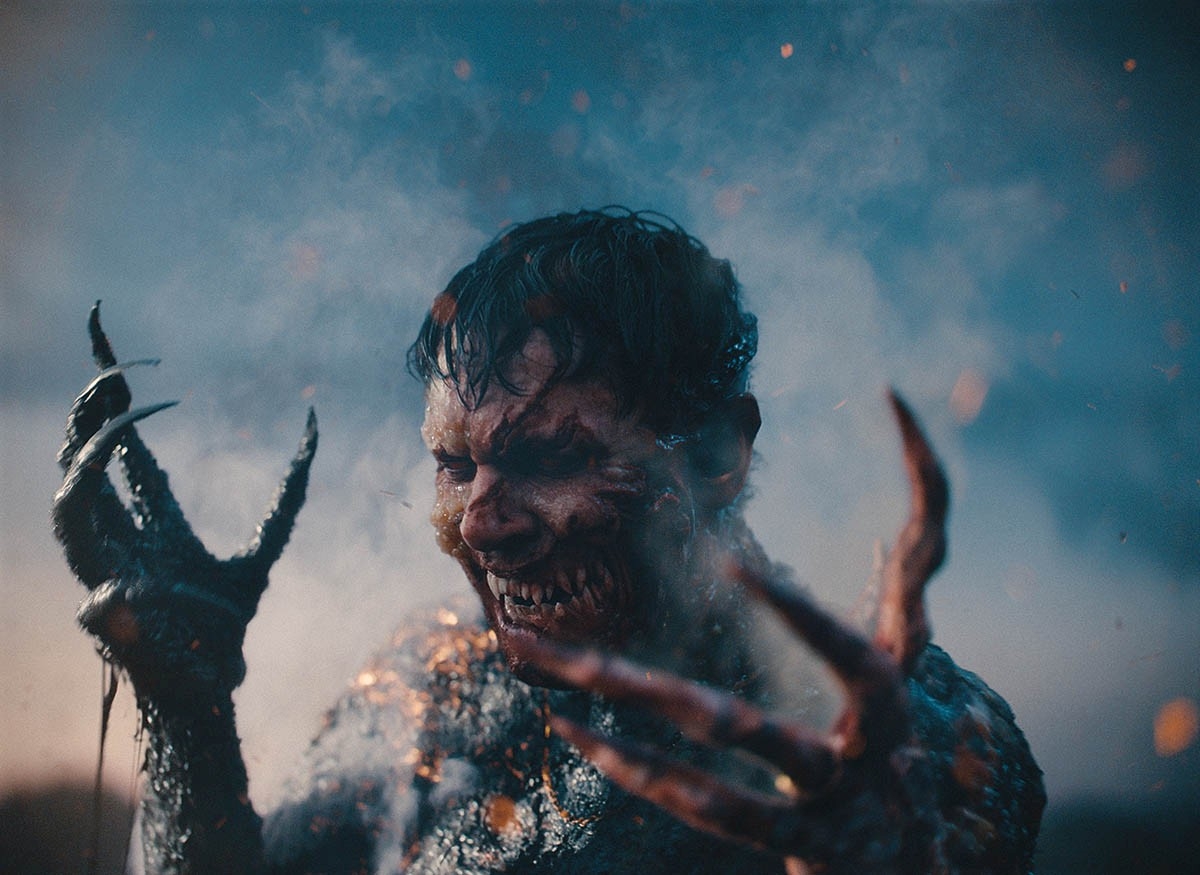
Taking a big bite out of the Oscar nominations neck with a record-breaking 16 mouthfuls is Ryan Coogler and Warner Bros.’ horror drama, Sinners. And one among them recognizes the film’s 1,013 visual effects shots. Overseeing the contributions of Storm Studios, Rising Sun Pictures, ILM, Base FX, Light VFX, Outpost VFX, TFX, Baraboom! Studios and an in-house team of six artists were the visual effects supervisor and producer duo of Michael Ralla and James Alexander. “I don’t think that this film would work without the blues and the first half of the film, which is similar to The Blues Brothers and oddly enough, Ryan Coogler has never seen it!” laughs Ralla. “Then it turns into From Dusk to Dawn. The fact that somebody combines the two and adds additional themes on top is what makes it unique and original.”
Driving the narrative are twin brothers Smoke and Stack, both portrayed by Michael B. Jordan, who decide to establish a juke joint in 1932 Mississippi. The twinning effect could not be accomplished simply through a face swap because Sinners was being shot on IMAX. “I remember attending a test screening with Autumn Durald Arkapaw [Cinematographer] at the IMAX headquarters,” recalls Ralla. “When I looked especially at the 50 perf 65mm IMAX footage projected on the screen, it immediately became clear that nothing we had until that point was going to be good enough for that level of fidelity because you saw every pore.” He continues, “The split screen technique has the highest fidelity but there had to be physical interaction between the siblings. There was also the matter of not interrupting the on-set momentum of Ryan Coogler. We thought, ‘Wouldn’t it be cool if we had something that Michael could strap on like a backpack and it captures him in 360 degrees from every possible angle but still allows him to move around and deliver the performance as he just did.”
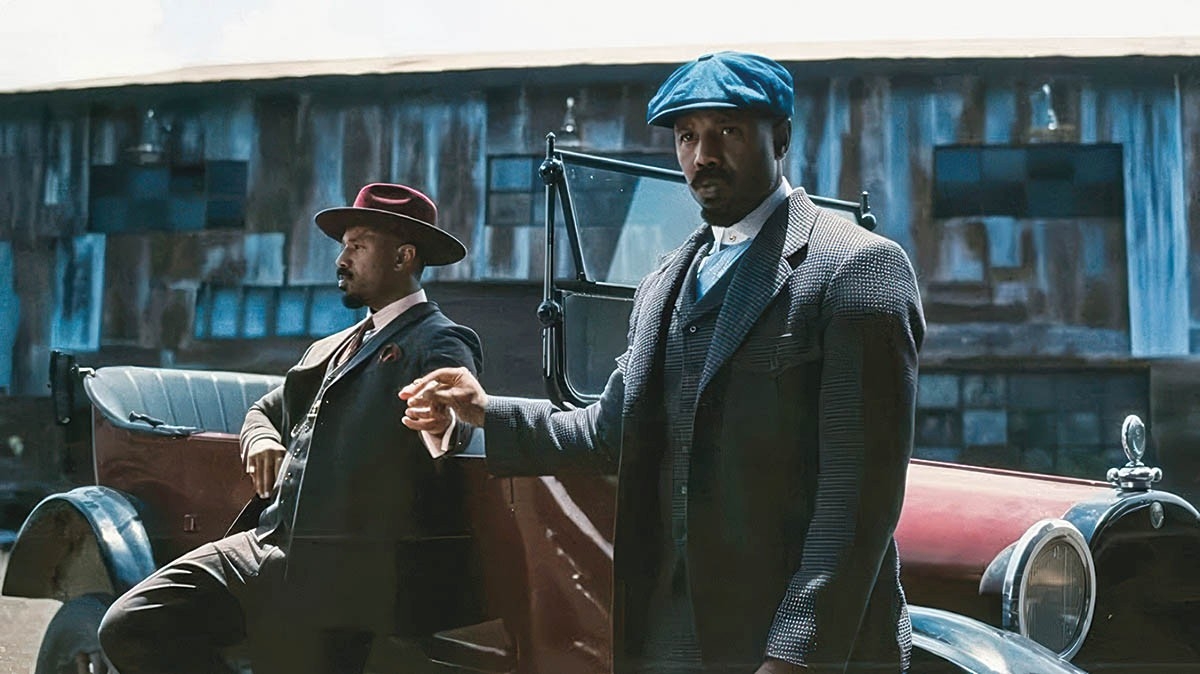
Well, it turns out they did have something. The Halo rig. The Halo rig consisted of 12 cameras positioned around Jordan’s head with the firmware modified to shoot in LOG. “The Halo rig is a carbon fiber ring, so it was surprisingly light,” Ralla explains. “And the fact that it’s shoulder worn distributes the weight in a way that it didn’t make a big difference to Michael. Switching between Smoke to Stack was trickier for Michael than putting on the Halo rig.” The Halo rig was strictly used for shots with lots of physical interaction between the twins, including a long, drawn-out fight between them at the end.
Extensive reference material, such as on-lens aberrations, were provided to the visual effects companies. “ILM, Storm VFX and Rising Sun Pictures were brought in early during pre-production and I had dialogue with all of them about, ‘What do you need? What do you want?’” notes Ralla. “I added that [list] on top of what I would normally collect in terms of data. That gave us an extensive list to the point that the wranglers got frustrated because it was so much work and data to sort through. The lens aberrations are something I’ve been studying and putting a lot of focus on since Black Panther: Wakanda Forever. The motivation for that was Autumn telling me back then, ‘Whenever something comes out of the visual effects pipeline it doesn’t look like it was shot with my lenses.’ I didn’t understand at the time what she meant. I started studying her lenses and it was interesting because she actually couldn’t necessarily put a finger on what it was that defined her lenses, but she would immediately react to things that didn’t have those characteristics. There were three things I figured we had to understand and figure out to make her happy. It was understanding the aberration and lens characteristics, and finding a terminology to describe what we are seeing on the screen. Then we needed a way to quantify and analyze that per lens because they were all different. We also had to provide artists with the tools to replicate those aberrations.”
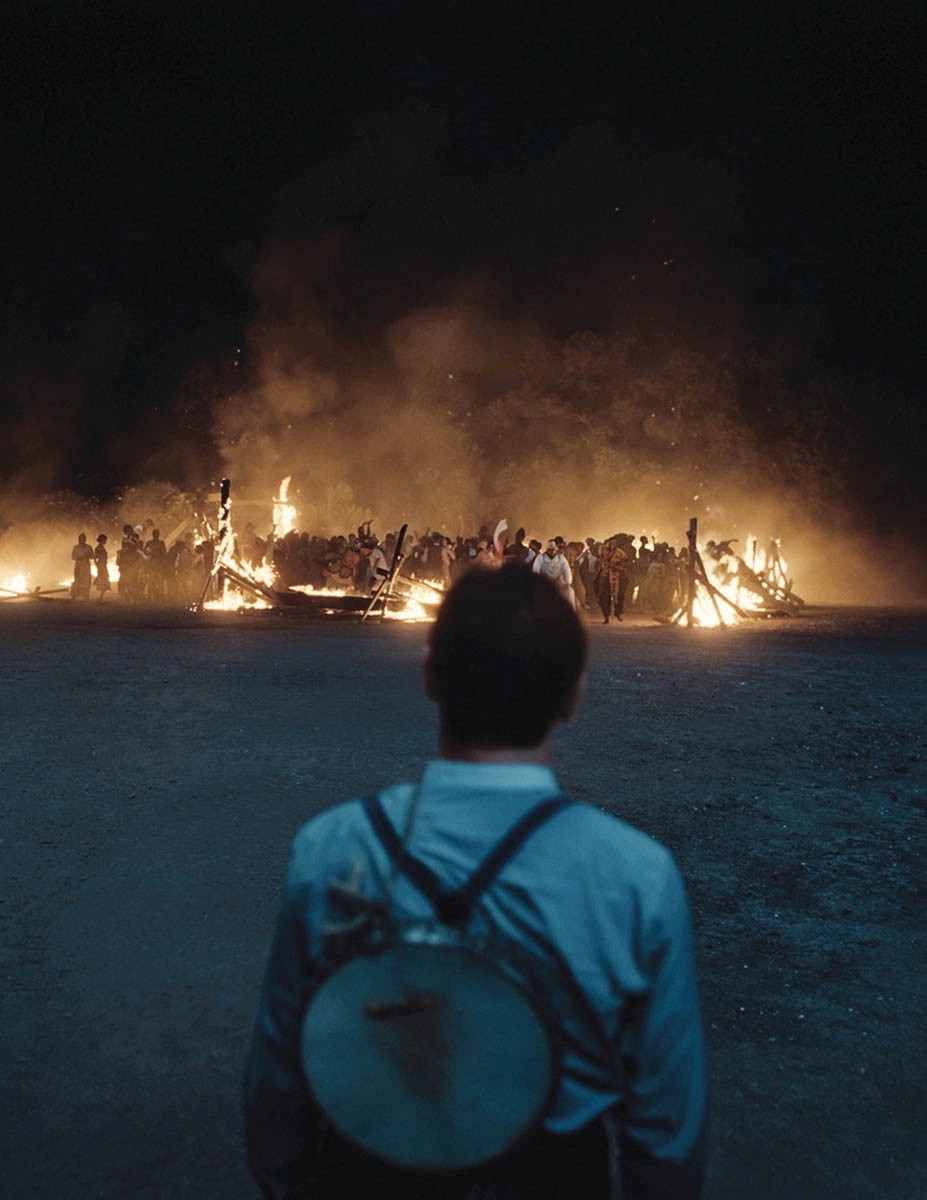
Complicating matters was that the majority of visual effects artists had never worked with film before, in particular 65mm. “That posed another interesting challenge,” says Ralla. “I was talking extensively to Nick Marshall [Visual Effects Supervisor, ILM] and Guido Wolter [Visual Effects Supervisor, Rising Sun Pictures]. I gave those lens seminars again like I did on Black Panther: Wakanda Forever. 90 minutes on Zoom to show them what I was looking for, what we needed, how Autumn shoots, and why this matters to her. Then those guys had to train their compositors on how to work with film because they had never touched scanned celluloid. Dustbusting; people were going, ‘What is this?’ Where are these scratches coming from? Why does one frame pop? Basically, we had to come back to ‘what is film’ and apply that to all of the CG stuff. It gets tricky because this film has 1,013 [VFX] shots, which is more than 50% of the runtime for Sinners.”
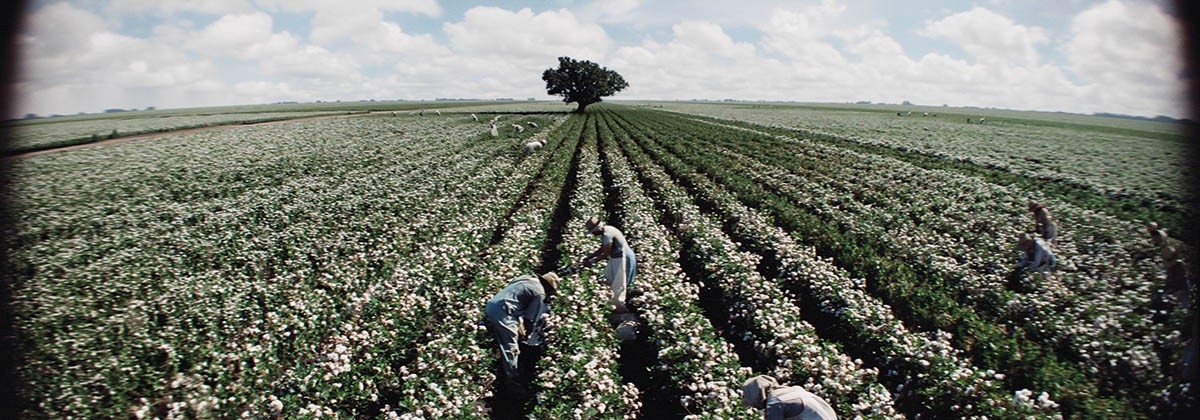
Raising the visual effects shot count to 1,013 from the original plan of 180 was using Louisiana, which does not have any cotton fields, to stand in for Mississippi. “For Ryan, you could already tell by how the script was written that we had to be within that environment,” states Ralla. “There had to be an ocean of white plants all the way to the horizon. Also, Ryan was fascinated by the fact that it’s the flattest place on Earth and the horizon keeps going, which isn’t the case in Louisiana because you always see some obstacles. Ryan is a filmmaker who comes from the Marvel world and is used to solving any problem that comes up with visual effects. To him, it’s a homogenous workflow.”
Ralla adds, “This film isn’t any kind of spectacle. Anything that we put in is story driven. Ryan is receptive to test screenings and we had several of them. We were always part of that audience and would get a full writeup on the backend. He asked us, ‘In that first half prior to the vampires showing up, what can we do to hint that something in this world was off?’ That’s where the birds came from. Michael Shawver made the suggestion, and I looked into the mythology and what it means when you have two or three birds circling above. Two birds mean an impending death and three mean someone has died.”
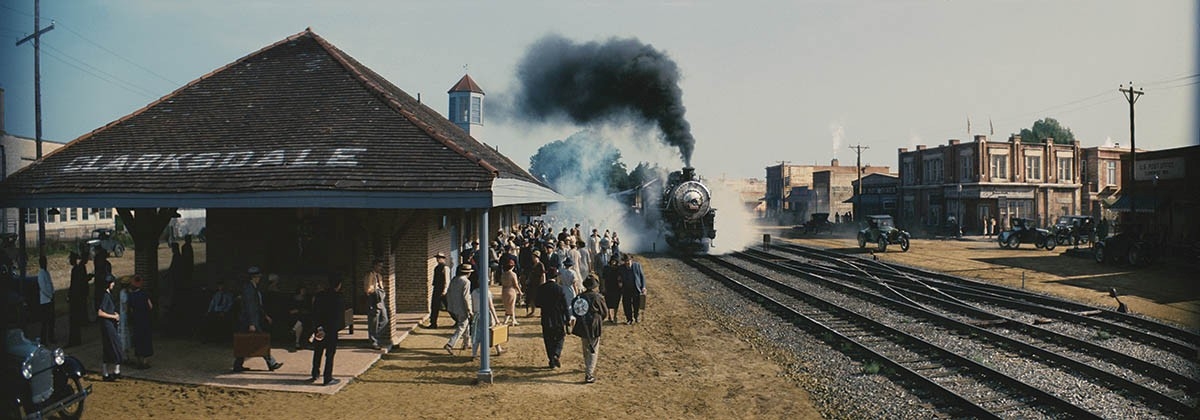
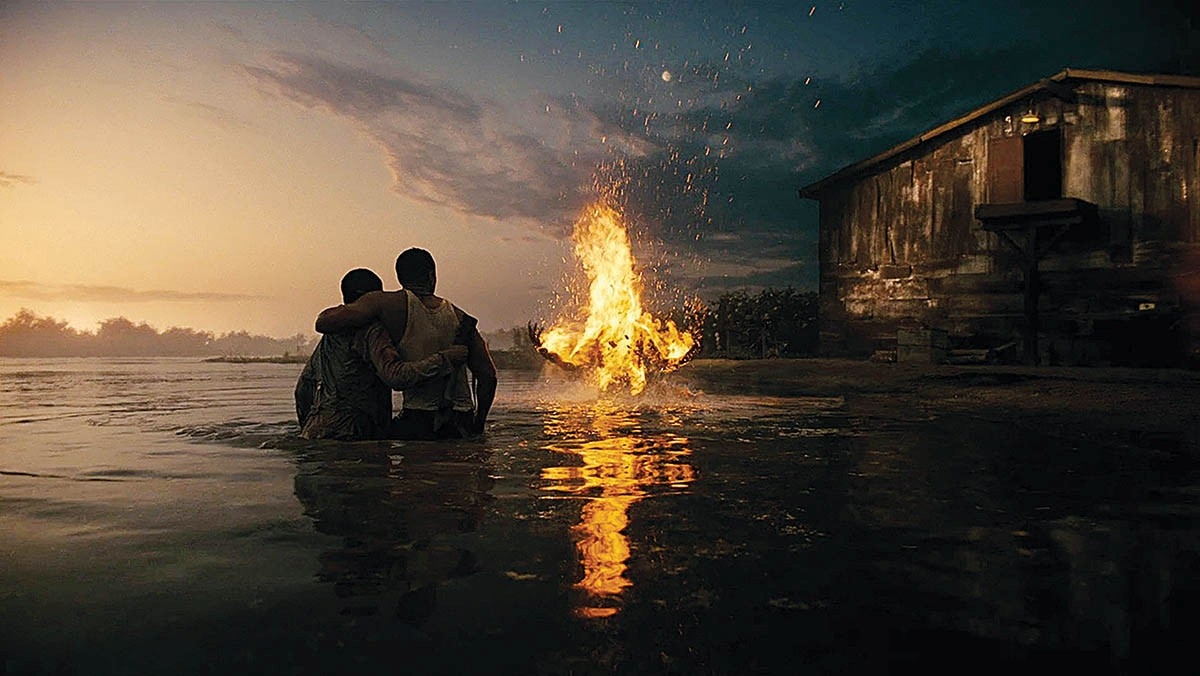
Regarding the use of visual effects, Ralla shares, “Anything that we would ever do would at least create some sort of photographic reference, even if sometimes that meant we would only keep the camera move. We would always shoot something with the intent to have a human element even if the shot was otherwise completely digital. There are more full CG shots in this film than you would ever think. Like the train station. I remember asking Donnie Dean [Special Effects Supervisor], ‘Can we have a smoke dolly that goes on real train tracks? It will be like a mini-train and blow steam and smoke into the crowd.’ Then those guys get creative; they are the MacGyvers of this business. For the fire tornado [death of Remmick, the main vampire antagonist], Donnie and his team engineered for a long time to get the proper turbulence. What that ended up being was high-end reference because it’s a full CG recreation.”
Ralla concludes by saying that the overall theme throughout the production was collaboration. “Ryan makes films with his friends. It’s a privilege to be invited into that circle.”

Trevor Hogg is a freelance video editor and writer best known for composing in-depth filmmaker and movie profiles for VFX Voice, Animation Magazine, and British Cinematographer.